The Crystal ingredient library
Lion’s mane
Hericium erinaceus
Meet lion’s mane, the distinctive white mushroom with cascading spines. Explore its traditional background, compare powders with extracts, and discover the two blended tinctures containing it in our range.

What is lion’s mane?
Lion’s mane is the common name for Hericium erinaceus, a mushroom recognised by its rounded clusters of fine, hanging white spines. Its shaggy appearance gives it a very different character from the glossy fans of reishi or the dark conks of chaga.
Also called bearded tooth fungus, it grows on wood and has a long history in Asian food and wellbeing traditions. In Japan, you may encounter the name yamabushitake.
- Scientific nameHericium erinaceus
- Also known asBearded tooth fungus
- AppearanceWhite, cascading spines
- Our preparationsTwo blended liquid tinctures
Getting to know the mushroom
The striking white cluster is the fruiting body: the visible reproductive structure of the fungus. Mycelium is the network of thread-like growth that forms another part of the organism.
When reading a mushroom specification, these terms deserve attention. A product may identify its source material as fruiting body, mycelium or another preparation. A picture of a whole mushroom does not establish what has been used in a particular extract.
Our current product listings name lion’s mane as an ingredient but do not declare a fruiting-body percentage or a measured amount of individual mushroom constituents. This guide therefore focuses on the information available for each finished blend.

Fresh mushroom, powder and liquid extract
Lion’s mane appears in both food and supplement formats. The familiar mushroom name connects them, but their preparation and serving instructions differ.
- Fresh culinary mushroom: a food ingredient used in cooking.
- Whole-mushroom powder: dried material that has been milled. The label should identify the material used.
- Extract powder: a dried extract, which is a different description from simply grinding a mushroom.
- Liquid tincture: an extract in a liquid medium, used according to its own label.
Neither of our two lion’s-mane-containing tinctures is a single-mushroom product. The complete blend is the useful starting point when deciding which preparation fits your preferences.
A serving of liquid extract should not be converted into a portion of fresh mushroom or a spoonful of powder without a specific, documented equivalence.
Lion’s mane in our range
Mushrooms and herbs
Brain Boost Herbal Tincture
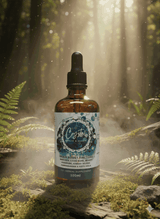
This blend lists rhodiola, lion’s mane, brahmi, rosemary, ginkgo, ashwagandha and gotu kola in a 35% alcohol base. It brings together mushroom and herbal ingredients in one liquid preparation.
Read the full formula and follow the current bottle label. Its name does not tell you the amount of lion’s mane in an individual serving.
Explore Brain Boost →
Five-mushroom blend
Five Mushroom Dual Extract Tincture
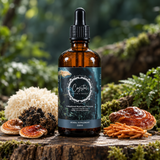
Lion’s mane joins reishi, chaga, cordyceps and turkey tail in a water-and-alcohol extract. Alcohol and purified water are listed alongside the mushroom extracts.
The current listing names five mushrooms without declaring equal proportions. It should not be read as a 20% share of each mushroom.
Explore the mushroom blend →Understanding the extraction information
Dual extraction describes the use of both water and alcohol in the Five Mushroom tincture. It does not mean double strength, and it does not establish a particular level of any compound.
Brain Boost lists a 35% alcohol base. That figure describes its alcohol content, not the proportion of lion’s mane. The two products have different formulas, so their serving directions should be read separately.
For either bottle, details such as an extract ratio, ingredient origin or laboratory-assayed constituent level need product-specific documentation. Colour, taste and bottle size cannot supply that information.
Read our alcohol in tinctures guide for more about the liquid medium. Adding water or juice dilutes a serving but does not remove its alcohol.
Choosing and looking after your tincture
Begin with the complete ingredient list, including any herbs you already use in other preparations. Sharing one mushroom ingredient does not make these two blends interchangeable.
Shake and measure as directed on the current label. Keep the bottle securely closed in a cool place away from sunlight and heat, and out of reach of children. Retain the label and batch details, and keep the dropper clean.
Both listings advise seeking appropriately qualified advice before use during pregnancy or breastfeeding, when taking medication or under medical supervision. Read the suitability information for the full formula.
If you need more information about a current batch or an undeclared specification, contact us. We can help you check the available product details before you choose.
Lion’s mane questions answered
What is lion’s mane?
Lion’s mane is Hericium erinaceus, also called bearded tooth fungus. Its white fruiting body has fine, hanging spines.
Which products contain lion’s mane?
It is listed in Brain Boost Herbal Tincture and Five Mushroom Dual Extract Tincture. Both are blended preparations.
Is Brain Boost a pure lion’s mane tincture?
No. Its formula also lists rhodiola, brahmi, rosemary, ginkgo, ashwagandha and gotu kola, in a 35% alcohol base.
Is liquid extract the same as mushroom powder?
No. Powder and liquid extract describe different preparations. Follow the directions for your chosen product rather than converting servings between them.
What does dual extract mean?
For the Five Mushroom tincture, both water and alcohol are used in extraction. This does not mean double strength or specify equal mushroom proportions.
Are these tinctures alcohol-free?
No. Both list alcohol. Diluting a serving in water or juice does not remove it.
Continue exploring mushrooms
Read about reishi, chaga, cordyceps and turkey tail, or return to the Learn ingredient library.
For background on the fungus’s appearance and habitat, visit Kew’s introduction to lion’s mane. General species information does not establish the specification of a particular bottle.
For complete ingredients, allergens, suitability and directions, read the current product label. A guide to one ingredient does not describe every possible effect of the finished preparation.
