
The Crystal ingredient library
Amla
Indian gooseberry
Meet amla, the Indian gooseberry: a fruit with a long herbal heritage, offered in our range as an organic berry tincture.

What is amla?
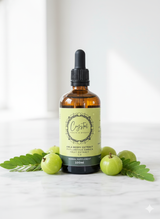
Amla is a small fruit with a long place in Indian food and herbal traditions. Also called Indian gooseberry, it is the fruit of Phyllanthus emblica. Its rounded shape and pale green colour make it a distinctive botanical ingredient, familiar in preparations ranging from dried fruit to liquid extracts.
In our range, amla is offered as a berry tincture. Understanding the fruit behind the bottle helps you compare preparations, read an ingredient list and choose a format that fits your routine.
- Common namesAmla, Indian gooseberry
- Botanical namePhyllanthus emblica
- Plant part in our tinctureFruit, listed as amla berries
- Our preparationOrganic amla berries and organic alcohol
The plant and its herbal heritage
The name Emblica officinalis also appears in herbal writing and ingredient references. It is a botanical synonym of Phyllanthus emblica, rather than a separate ingredient to add to a formula. Looking for the botanical name is a useful way to follow the same plant across different labels.
Amla is familiar in Ayurveda, the traditional Indian system of wellbeing, and in food traditions using the fruit. That history is part of its appeal to people interested in botanical ingredients and considered daily rituals.
Traditional preparations vary. A fruit used in a food recipe, a dried powder and a modern tincture each have their own character. The shared plant name gives them a common origin, but the preparation still matters when you decide how to use a product.

Fresh fruit, powder and tincture: understanding the formats
One ingredient can appear in several forms. The most helpful comparison starts with what is actually in the product, how it has been prepared and how a serving is measured.
- Fresh fruit: the whole food, with its naturally occurring water, fibre and other components.
- Dried fruit powder: fruit material that has been dried and milled. Check whether the label describes whole fruit powder or an extract powder.
- Liquid tincture: a preparation made by extracting plant material into a liquid medium. Our amla tincture lists organic alcohol.
- Blended products: formulas combining amla with other ingredients, whose directions apply to that complete blend.
These formats are not interchangeable spoon for spoon or drop for drop. A tincture serving is not a serving of whole fruit, and the fruit's nutrient profile cannot simply be transferred to the liquid extract.
If you are comparing products specifically for vitamin content, look for a declared amount per serving. The word “amla” alone does not establish a measured vitamin C level in a tincture.
Why alcohol is used in a tincture
Alcohol is used as an extraction medium in traditional tincture making. It helps carry extracted plant constituents into a liquid preparation and contributes to preservation. The resulting format allows the labelled amount to be measured in drops and diluted before use.
Our amla product lists organic amla berries and organic alcohol. It is therefore an alcohol-containing tincture. Adding water or juice changes how diluted a serving is, but does not remove its alcohol.
For more about the preparation itself, explore our guide to alcohol in herbal tinctures. When comparing bottles, check the plant part, ingredients and directions rather than judging concentration by colour or taste.
Amla in our range
Botanical fruit extract
Amla Berry Herbal Tincture
A liquid preparation listing organic amla berries and organic alcohol. This is the amla product currently in our range, supplied with directions for shaking and diluting the labelled serving in water or juice.
Choose this format if you are looking for an alcohol-based fruit tincture and it suits your circumstances. Check the bottle for its directions, date and suitability information before adding it to your routine.
Explore the amla tincture →Making room for a botanical routine
A simple routine begins with knowing what you are taking. Read the label, use the supplied dropper as directed and avoid estimating a tincture serving with a kitchen spoon. Follow the bottle's instructions for shaking and dilution.
Keep a note of the botanical products you already use, particularly if more than one blend contains amla. A familiar ingredient name can appear in several products, and combining them can make it harder to keep track of the total amount.
Follow the product's suitability advice during pregnancy or breastfeeding, if you take medication or have a medical condition. If you need an alcohol-free preparation, this particular tincture does not meet that preference. You can contact us with questions about the ingredients or label.
Storage and everyday handling
Store the bottle tightly closed in a cool, dark place, away from direct sunlight and heat. Follow the date printed on your product and keep it out of reach of children.
Keep the dropper clean and avoid touching it to your mouth or other surfaces. Replace it promptly after measuring a serving. If you decant a dose into water or juice, prepare it when you intend to use it rather than making a large diluted batch to store.
Retain the original bottle and label so that the ingredient list, instructions and batch details remain available. If you have a question about a particular bottle, those details help us identify it.
Amla questions answered
What is amla?
Amla is the fruit of Phyllanthus emblica, also known as Indian gooseberry. It has a long history in Indian food and Ayurvedic herbal traditions.
Are amla and Indian gooseberry the same thing?
Yes. Indian gooseberry is a common name for amla. You may also see the botanical name Emblica officinalis, a synonym of Phyllanthus emblica.
What is in your amla tincture?
Our Amla Berry Herbal Tincture lists organic amla berries and organic alcohol. Read the current product label for the full directions and suitability information.
Is the amla tincture alcohol-free?
No. Organic alcohol is listed as an ingredient. Diluting a serving in water or juice does not make it alcohol-free.
Is an amla tincture the same as fresh fruit or powder?
No. Fresh fruit, dried fruit powder and liquid extracts are different preparations. You cannot assume that their serving sizes, fibre content or vitamin levels are equivalent.
How should I store the tincture?
Keep the bottle tightly closed in a cool, dark place away from sunlight and heat, and out of reach of children. Follow the date and any additional storage instructions on your bottle.
Keep exploring
Read more about alcohol in tinctures, explore the separate vitamin C ingredient guide, or return to the Learn ingredient library.
Botanical reference: Royal Botanic Gardens, Kew: Phyllanthus emblica. Traditional naming reference: Kew's Medicinal Plant Names Services entry for amla.
For complete ingredients, allergens, suitability and directions, read the current product label. A guide to one ingredient does not describe every possible effect of the finished preparation.
