
The Crystal ingredient library
Ashwagandha
Withania somnifera
Discover ashwagandha root and its Ayurvedic heritage. Compare single-herb tinctures, blended preparations and gummies, and explore all three products containing ashwagandha in our range.

What is ashwagandha?
Ashwagandha is Withania somnifera, a shrub with a long place in Ayurvedic traditions. The root is the part named in our standalone Ashwagandha Tincture.
You may also encounter the names winter cherry and Indian ginseng. The scientific name is useful when comparing labels, because common names alone can be less precise.
- Botanical nameWithania somnifera
- Part in our single-herb tinctureRoot
- Traditional backgroundAyurveda
- In our rangeTwo tinctures and a gummy blend
Understanding the root ingredient
A botanical product is more than a plant name. Root, leaf and mixed plant material describe different ingredients, so checking the part used helps you understand a preparation.
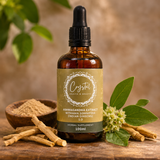
Our Ashwagandha Tincture lists organic ashwagandha root, organic alcohol and purified water. Its simple ingredient list makes it distinct from the wider formulas in Brain Boost and the Himalayan Shilajit Gummies.
The illustration shows dried root material. It introduces the ingredient visually rather than documenting a particular batch, growing region or extraction method.

Ashwagandha in Ayurvedic traditions
Ashwagandha is associated with traditional approaches to vitality and resilience. This heritage explains why it often appears in conversations about everyday wellbeing and restorative routines.
You may see it described as an “adaptogen”. This is a term used in herbal wellbeing discussions; it is not a specification for a bottle’s strength, plant part or serving size.
When choosing a preparation, bring the focus back to the actual formula. A traditional ingredient may be supplied as a root powder, a liquid tincture or one component of a blend, each with different directions.
Root powder, tincture and blended gummies
These formats offer different ways of preparing and presenting the ingredient.
- Root powder: dried root milled into a powder. Read its own preparation and serving instructions.
- Liquid tincture: an extract in a liquid medium. Our single-herb tincture contains alcohol and purified water.
- Herbal blend: ashwagandha appears alongside other botanicals, as in Brain Boost.
- Gummy blend: a finished supplement with a measured serving and several ingredients, as in our Shilajit Gummies.
A milligram amount in a gummy and a serving of tincture cannot be compared directly without details of the material and extraction. A declared amount also does not establish a particular withanolide percentage.
Products in our range containing ashwagandha
Single-herb liquid extract
Ashwagandha Tincture
A preparation of organic ashwagandha root, organic alcohol and purified water. Explore this product for the standalone root formula and follow the current bottle label.
Explore the root tincture →
Herbal and mushroom blend
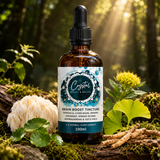
Brain Boost Herbal Tincture
Ashwagandha joins rhodiola, lion’s mane, brahmi, rosemary, ginkgo and gotu kola in a 35% alcohol base. The full blend has its own directions and suitability information.
Explore Brain Boost →
Multi-ingredient gummy
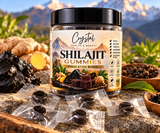
Himalayan Shilajit Gummies
The current listing declares 200 mg of ashwagandha per serving of two gummies, alongside shilajit, black maca, Tongkat Ali, ginger and black pepper. This is a blended supplement rather than a pure ashwagandha gummy.
The 200 mg figure is per two-gummy serving, not per gummy. Read the complete label before choosing this format.
Explore the gummy blend →Choosing between preparations
Start with the complete formula and your preferred format. Check the plant part, other ingredients, labelled serving and suitability information.
Our current tincture listing does not declare an extract ratio or a standardised withanolide percentage. Those figures should come from product-specific documentation rather than a general description of ashwagandha.
Both tinctures contain alcohol. Adding a serving to water or juice dilutes it but does not remove the alcohol. Our guide to alcohol in tinctures explains the liquid medium in more detail.
If you already use a multi-ingredient supplement, check whether it contains ashwagandha before adding another preparation. For questions about a current label or specification, contact us.
Suitability, directions and storage
Avoid ashwagandha during pregnancy and breastfeeding. Check suitability with a qualified healthcare professional if you have thyroid, liver or autoimmune problems or take medicines. This applies to blends containing ashwagandha as well as standalone products.
Use the directions on the product you choose and do not transfer a serving between formats. Shake tinctures as directed and keep their droppers clean.
Store the tinctures tightly closed in a cool, dark place away from direct sunlight and heat, out of reach of children. Follow the gummy jar’s own storage instructions and retain the original packaging and batch details.
Ashwagandha questions answered
What is ashwagandha?
Ashwagandha is Withania somnifera, a shrub associated with Ayurvedic traditions. Our standalone tincture uses the root.
What is in your Ashwagandha Tincture?
The listing names organic ashwagandha root, organic alcohol and purified water.
Which products contain ashwagandha?
It appears in Ashwagandha Tincture, Brain Boost Herbal Tincture and Himalayan Shilajit Gummies.
How much ashwagandha is in the gummies?
The current listing declares 200 mg per serving of two gummies. This is not the amount per individual gummy.
Are the tinctures alcohol-free?
No. Both Ashwagandha Tincture and Brain Boost contain alcohol. Diluting a serving does not remove it.
Can I use ashwagandha during pregnancy or breastfeeding?
Avoid ashwagandha during pregnancy and breastfeeding. Check suitability with a qualified healthcare professional if you have thyroid, liver or autoimmune problems or take medicines.
Continue exploring
Read our lion’s mane guide for another ingredient in Brain Boost, or explore fulvic substances and the full Learn ingredient library.
Botanical background: Kew’s ashwagandha plant profile.
For complete ingredients, allergens, suitability and directions, read the current product label. A guide to one ingredient does not describe every possible effect of the finished preparation.
