
The Crystal ingredient library
Bilberry
Vaccinium myrtillus
Meet bilberry, Vaccinium myrtillus: a dark fruit with a long food and herbal history, found in three preparations across our range.

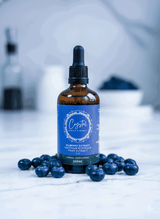
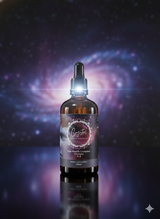
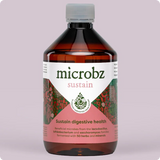
What is bilberry?
Bilberry is a small, dark berry with a place in European food and herbal traditions. Its botanical name is Vaccinium myrtillus. You may also know it as blaeberry, whinberry or whortleberry: regional names that reflect how familiar this fruit has been in different parts of Britain.
In our range, bilberry appears as a single-herb tincture and as one ingredient in two broader blends. This guide introduces the plant and helps you understand the differences between those preparations.
- Botanical nameVaccinium myrtillus
- Ingredient typeBotanical fruit
- Also calledBlaeberry or whortleberry
- In our rangeTwo tinctures and Sustain probiotic
A closer look at the plant
Bilberry grows as a small shrub with green leaves and dark berries. It belongs to the Vaccinium genus, which also includes blueberries and cranberries. Its fruit has been gathered for foods such as pies and preserves, alongside its place in herbal preparations.
Bilberry and the larger cultivated blueberries commonly sold in supermarkets are related, but the names should not be treated as a guarantee of the same botanical species. The familiar highbush blueberry is Vaccinium corymbosum; bilberry is Vaccinium myrtillus.
This is why the botanical name is useful on an ingredient list. It helps identify the plant even when regional names differ. The plant part matters too: a berry preparation should not be confused with one made from leaves.

Whole berries, tinctures and blended formulas
The starting plant is only one part of the story. How an ingredient is prepared changes its format and the way it is used. Whole fruit, dried fruit and a liquid extract are distinct preparations.
A tincture is made using a liquid extraction medium. Our single-herb bilberry tincture lists organic alcohol and purified water alongside the berries. It is measured according to the bottle's directions, rather than eaten as a portion of fruit.
A blended formula adds another layer: bilberry is combined with other ingredients, each contributing to the complete preparation. The amount of bilberry in one blend cannot be assumed to match a serving of a single-herb tincture.
When comparing products, look for the plant name, plant part, extraction medium and serving instructions. Colour alone is not a reliable measure of concentration, and a darker bottle does not establish that one product is stronger than another.
Bilberry in our range
There are three products to explore. Their descriptions below explain where bilberry sits within each formula.
Single-herb preparation
Bilberry Herbal Tincture
A straightforward liquid preparation listing organic bilberries, organic alcohol and purified water. This is the option to explore when you want a bilberry tincture with a short ingredient list.
Explore the bilberry tincture →
Six-botanical blend
Natural Eye Health Tincture
Bilberry is combined with marigold, eyebright, goji berry, holy basil and Chinese skullcap, in alcohol and purified water. Read the complete ingredient list and directions for this blend rather than transferring instructions from the single-herb bottle.
See the botanical blend →
Fermented multi-ingredient formula
Sustain probiotic
Bilberry is one of the botanical ingredients listed in Sustain, a liquid formula with live cultures, herbs, juices and minerals. It is a separate product format with its own serving and storage instructions. Check the full label, including its barley ingredient, when considering suitability.
Explore Sustain →Our tinctures are oral preparations. Even when a product's name refers to eye health, it is not an eye drop and must not be put into the eyes.
Choosing between the formats
Begin with the ingredient list. A single-herb preparation makes it easier to see which botanical you are choosing. A blend brings several ingredients together, so it is worth reading every component rather than focusing only on the familiar berry name.
Next, consider the liquid medium. Both tinctures listed here contain alcohol. Diluting a serving in water or juice changes its dilution but does not make the product alcohol-free. Our guide to alcohol in tinctures explains more about this preparation method.
Finally, check how the finished product is measured. A dropper-based tincture and a fermented liquid have different directions. Follow the label on the bottle you have, and keep track of overlapping ingredients if you already use another blend containing bilberry.
Using and storing your preparation
For the tinctures, shake and dilute as directed on the label, using the supplied dropper rather than estimating a serving with a kitchen spoon. Keep the dropper clean and avoid touching its tip to your mouth or other surfaces.
Store the tinctures tightly closed in a cool, dark place away from sunlight and heat, and out of reach of children. Follow the date and any additional instructions on your bottle. Sustain is a different formulation, so use its own label for storage and directions.
Read the product's suitability information before use, particularly during pregnancy or breastfeeding, when taking medication or when managing a medical condition. If you have a question about a particular bottle, contact us with the product name and batch details.
Bilberry questions answered
What is bilberry?
Bilberry is the dark fruit of Vaccinium myrtillus, a small shrub. It is also known by regional names including blaeberry and whortleberry.
Is bilberry the same as blueberry?
Bilberry and cultivated blueberries are related members of the Vaccinium genus, but they are not necessarily the same species. Check for Vaccinium myrtillus when comparing bilberry products.
What is in your Bilberry Herbal Tincture?
The single-herb tincture lists organic bilberries, organic alcohol and purified water. It is a liquid botanical preparation used according to the bottle's directions.
Which products in your range contain bilberry?
Bilberry appears in our Bilberry Herbal Tincture, Natural Eye Health Tincture and Sustain probiotic. Each is a different formula with its own ingredients and directions.
Can I use bilberry tincture as eye drops?
No. Our bilberry and eye-health tinctures are oral preparations, not sterile eye drops. Do not put them into your eyes.
Is the bilberry tincture alcohol-free?
No. Organic alcohol is listed in the single-herb tincture. Diluting it with water or juice does not remove the alcohol.
Explore related ingredients
Continue with our amla fruit guide, learn about alcohol in herbal tinctures, or browse the Learn ingredient library.
Botanical reading: the Royal Horticultural Society's bilberry profile and Kew's notes on traditional fruits provide background on the plant and its food history.
For complete ingredients, allergens, suitability and directions, read the current product label. A guide to one ingredient does not describe every possible effect of the finished preparation.
