
The Crystal ingredient library
Bentonite
Mineral clay
Explore bentonite clay's earthy texture, its transformation from powder to paste, and its place in our body care and bath rituals.

What is bentonite clay?
Bentonite is a naturally occurring mineral clay, valued for the way it changes when water is added. A dry powder becomes a soft, spreadable paste, bringing an earthy texture to masks and other external preparations. In our range, it appears both on its own and alongside sugars, botanical oils and bath salts.
The clay is rich in minerals from the smectite group. Bentonite deposits commonly develop through the alteration of volcanic ash over geological time. This is background to the ingredient's formation; it does not identify the country or deposit supplying any particular pack.
- Ingredient familyMineral clay
- Label nameBentonite
- When mixed with waterHydrates, swells and forms a paste
- In our rangeClay powder, body scrub and bath soak
From dry powder to smooth paste
Bentonite's layered mineral structure allows water to enter between layers. The resulting swelling helps explain why a little water can turn loose powder into a thicker mixture. In cosmetic formulas, clays can contribute absorbency and body.
The final texture depends on the particular clay and how much water you add. A thicker paste stays where it is spread, while a more diluted mixture is easier to disperse. Adding water gradually makes it easier to reach the consistency you want.
Clay does not dissolve in the same way as salt. It can remain dispersed through water or settle over time. This is useful to understand when comparing a clay paste with a bath blend containing both clay and soluble salts.

Choosing a clay ritual that suits you
The appeal of clay skincare is often its simplicity: a small bowl, a smooth paste and a few quiet minutes for yourself. Start by deciding whether you want to prepare a plain clay mixture or use a finished product that combines several ingredients.
Plain powder gives you control over the amount of water used. A body scrub offers a different experience, combining grains for physical exfoliation with oils and clay. A bath soak spreads its ingredients through a much larger amount of water. These formats feel different and have different directions.
A comfortable routine matters more than applying a thick layer or leaving a product on for longer. Follow the pack, avoid broken or irritated skin and rinse off if the product feels uncomfortable. There is no need to treat a tight or stinging sensation as a sign that a clay preparation is working.
Mixing and handling bentonite powder
For the standalone clay, follow the instructions supplied with your pack. Keep the preparation simple and make a small fresh amount each time.
- Prepare your tools: use a clean bowl and clean utensil, with enough space to stir gently.
- Handle the powder carefully: spoon it out slowly and avoid raising or breathing in dust.
- Add water gradually: stir until you have a smooth, manageable paste rather than adding a large amount all at once.
- Apply thoughtfully: try a small area first, keep away from the eyes and lips, and follow the product directions for use and rinsing.
- Make it fresh: discard leftover wet paste and wash the bowl and utensil after use.
This guide covers external cosmetic use. Our standalone product is described for external preparations; it is not presented here as an edible clay. The way clay behaves in water does not establish a benefit from swallowing it.
Bentonite in our range
Three products give you different ways to explore this ingredient. Choose by the finished product's purpose and full ingredient list.
Single ingredient
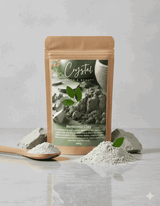
Bentonite Clay
Our standalone mineral clay powder for external preparations. Mix a small amount with water as directed when you want a simple cosmetic clay paste.
Explore the clay powder →
Body care
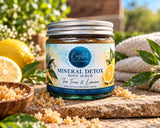
Mineral Detox Body Scrub
Bentonite sits alongside raw brown cane sugar, coconut sugar, apricot kernel oil, coconut oil and vitamin E, with tea tree and lemon essential oils. The sugar grains provide the scrub texture while the oils contribute to its skin feel.
Discover the body scrub →
Bath ritual
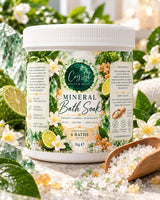
Mineral Bath Soak
A finished blend of Epsom salt, Celtic sea salt, sodium bicarbonate and bentonite, scented with bergamot, jasmine absolute and frankincense. Follow the tub's directions and take care when stepping out of the bath, as surfaces may become slippery.
Explore the bath soak →These are external-use products. A scrub is not a face mask, and a scented bath blend should not be used as plain clay powder.
How clay fits alongside other ingredients
In the body scrub, bentonite is one part of a complete blend. Read our apricot kernel oil guide and coconut oil guide to explore the oils used alongside it.
In the bath soak, clay brings a different texture from the salt crystals. Our Celtic sea salt guide explains the origin and character of the coarse grey sea salt in that blend.
You may also come across clay and charcoal together in natural-care discussions. They are separate materials: bentonite is mineral clay, whereas activated charcoal is processed carbon. Choose the product intended for your particular use rather than substituting one powder for another.
Keeping the powder and blends at their best
Keep dry bentonite in its closed original packaging, away from moisture and out of reach of children. Use a dry utensil to remove powder and avoid returning damp tools to the pack. Keeping the label with the product also keeps its directions and batch information close to hand.
For scrubs and bath blends, reseal the container after use and follow the storage guidance on the label. Avoid introducing bathwater into the container. Prepare plain clay paste only for immediate use: adding water changes the storage conditions, and a homemade mixture has no established preservation system.
Bentonite questions answered
What is bentonite clay?
Bentonite is a naturally occurring mineral clay rich in smectite minerals. It takes up water, swells and forms a paste, making it useful in external clay preparations.
Does bentonite dissolve in water?
No. It disperses and hydrates rather than dissolving like salt. A clay mixture may look cloudy or form a paste, and some material can settle.
Can I use it as a face mask?
Our standalone Bentonite Clay is described for external cosmetic preparations, including a paste mixed with water. Follow its pack directions, try a small area first and keep it away from your eyes.
Is bentonite the same as activated charcoal?
No. Bentonite is a mineral clay, while activated charcoal is a form of processed carbon. Their appearance, composition and behaviour differ, so they are not interchangeable ingredients.
Which Crystal Health & Beauty products contain bentonite?
Bentonite appears in our standalone Bentonite Clay, Mineral Detox Body Scrub and Mineral Bath Soak. The scrub and bath soak are finished blends with their own ingredients and directions.
Can I keep a clay paste after mixing it?
Prepare only what you need for immediate use and discard leftovers. A homemade clay-and-water mixture has no established preservation system or storage life. Keep the remaining dry powder sealed and dry.
Explore more
Browse the Learn ingredient library for more mineral and botanical guides.
Ingredient background: British Geological Survey's description of bentonite and smectite, and the Cosmetic Ingredient Review report on naturally sourced clays. These describe the material and cosmetic ingredient category, rather than testing our finished products.
For complete ingredients, allergens, suitability and directions, read the current product label. A guide to one ingredient does not describe every possible effect of the finished preparation.
