The Crystal ingredient library
Copper: ionic and colloidal forms
Elemental copper
Explore copper, the difference between ionic and colloidal forms, and our liquids, atomiser and handcrafted copper soaps.

Copper at a glance
- ElementCopper · Cu · atomic number 29
- Forms in the rangeColloidal and ionic liquids
- Other formatsAtomiser and handcrafted soaps
- Label distinctionPurity, concentration and volume are separate
Meet the element copper
Copper is a naturally occurring metal recognised by its warm reddish colour. Its chemical symbol is Cu and its atomic number is 29. People have shaped copper into useful objects for thousands of years, and its ability to conduct heat and electricity remains important today.
Copper can also form alloys: bronze combines copper with tin, while brass combines it with zinc. These familiar examples show why the name of an element and the description of a finished material are different things.
For our ingredient library, the same care applies to liquids and soaps. The ingredient’s form, the surrounding formula and the intended use all matter.
Ionic and colloidal: understanding the words
Ionic describes dissolved electrically charged species. Colloidal describes very small particles dispersed through another medium. A preparation can contain more than one form, so the words on a label do not provide a complete analysis.
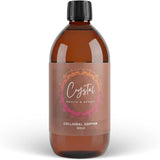
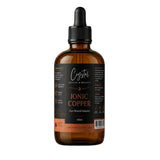
Our Colloidal Copper and Ionic Copper 100ml are separate products. Compare their individual specifications rather than assuming that equal volumes provide equal amounts of copper. Starting-metal purity does not establish the finished concentration or the balance of dissolved and particulate copper.
Purity, PPM and measured amounts
Three details make a label easier to understand. Purity describes a starting material, concentration describes the amount present in a finished preparation, and volume describes the quantity of liquid in the bottle.
PPM stands for parts per million. A PPM figure is not a particle-size measurement or a rating of effectiveness. A percentage referring to the starting metal should not be read as the percentage of metal in the bottled liquid.
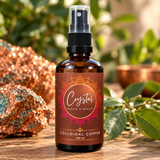
The Colloidal Copper listing describes starting copper of 99.999% purity. The copper atomiser is separately labelled 20 PPM. Neither figure should be transferred automatically to another copper product.
For a supplement, the amount of copper supplied per measured serving is the useful nutritional quantity. A bottle volume alone does not provide that information, and a spray’s delivered amount also depends on its output per spray.

Copper as a dietary trace mineral
Copper is an essential trace mineral, meaning the body needs it in small amounts. It participates in normal functions including energy production and the formation of connective tissue. Food sources include nuts, seeds, wholegrains and shellfish.
That nutritional role does not mean every copper preparation is an equivalent source of dietary copper. A rinse-off soap is a cleansing product, and an ingredient’s presence in a topical formula does not establish nutritional delivery through the skin.
More is not automatically better. Excess copper intake can be harmful, so avoid stacking copper supplements without checking the total amount supplied and whether supplementation is appropriate.
Copper across our range
Liquid preparations
The range includes Colloidal Copper, Ionic Copper 100ml and a copper atomiser labelled 20 PPM. Each is a separate preparation with its own specification.
Handcrafted soaps
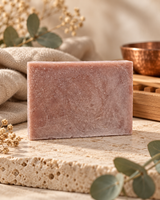
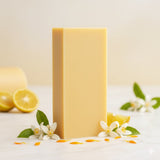
Our copper soaps use a coconut-oil soap base. Browse the Fragrance Free and Neroli varieties, checking the current label for the complete formula.
Sets and selections
Copper soap options are available in the choose-your-own trio. The mixed-liquid bundle lists copper alongside silver; check its current contents before ordering.
The character of our copper soaps
Copper soaps bring the ingredient into a solid cleansing format. The coconut-oil soap base provides the lather, while the individual recipe determines its scent and appearance.
Our range includes a Fragrance Free option and a Neroli option. The current soap trio listing distinguishes the unscented copper bar from the aromatic variety. Browse the individual label when checking fragrance ingredients, particularly if you prefer to avoid them.
Wet the bar, work up a lather and rinse away after washing. Let it drain and dry between uses. These are external cleansing products; their ingredients should not be interpreted as a dietary copper serving.
Common questions
Is ionic copper the same as colloidal copper?
No. Ionic describes dissolved charged species; colloidal describes dispersed particles. A liquid can contain more than one form, and its actual composition requires analysis. The product name alone does not quantify those proportions.
Is copper an essential mineral?
Yes. Dietary copper is needed in small amounts for normal body functions. This does not show that every copper product supplies an appropriate nutritional dose, or that applying a copper soap or spray provides dietary copper.
What does 20 PPM on the atomiser mean?
It is the stated concentration of that atomiser preparation. It is separate from bottle size and starting-metal purity. It does not state how much copper is delivered by each spray without knowing the spray volume.
Does Fragrance Free mean the same as Neroli?
No. They are separate soap varieties. The choose-your-own trio describes the fragrance-free copper option without added aromatic ingredients and the Neroli option with neroli. Check the current individual product label when choosing.
Can I use the same directions for every copper product?
No. Soap, an atomiser and a liquid supplement are different formats. Follow the directions for the exact product. Copper is needed only in small amounts, and excess intake can be harmful; do not combine supplements without checking the total copper supplied.
Keep exploring
Continue through our minerals and colloids guide, explore silver and gold, or return to the complete ingredient library.
Background references: Royal Society of Chemistry: copper and dietary copper information. Product descriptions refer to the current CHB listings; background references are not endorsements or tests of the finished products.
For complete ingredients, allergens, suitability and directions, read the current product label. A guide to one ingredient does not describe every possible effect of the finished preparation.
