The Crystal ingredient library
Silver and colloidal silver
Elemental silver
Explore silver, our original and botanical liquid preparations, and the different creams, gels and soaps in the Crystal range.

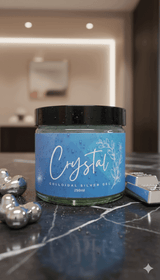
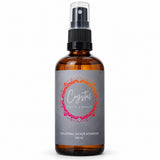
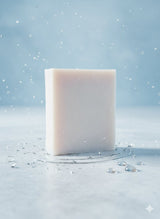
Silver at a glance
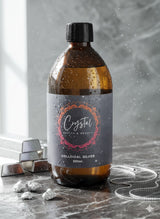
- ElementSilver · Ag · atomic number 47
- FormatsLiquids, cream, gel and soaps
- Original liquid baseSteam-distilled water
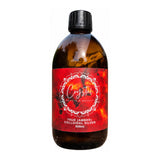
- Botanical preparationTrue Colloidal Silver uses cinnamon bark extract
Meet the element silver
Silver is a naturally occurring, relatively soft metal with a bright reflective surface. People have worked it into decorative objects and coins for thousands of years. It also has a place in the history of mirrors, photography and electrical materials.
Its chemical symbol is Ag, and its atomic number is 47. Silver can occur as native metal or within ores. A piece of metal, a dissolved silver compound and a colloidal preparation describe different forms, even though all involve the same element.
In our range, silver appears within several finished products. Understanding the complete preparation gives a clearer picture than treating the ingredient name as a description of everything in the bottle or jar.
What does colloidal silver mean?
A colloidal dispersion contains very small particles distributed through a surrounding medium. In a liquid colloid, that medium is liquid. Dissolved ions are a different form, and a preparation may contain both particles and ions.
The proportions and particle sizes cannot be established from a product name or photograph. Those details need product-specific measurements. In everyday browsing, start with the complete ingredient list, the stated concentration and the intended product format.
Our two silver preparations
Our original Colloidal Silver listing names high-purity silver and steam-distilled water. It describes small-batch production through the Crystal workshop.
True Colloidal Silver is a separate listing. It names elemental silver, steam-distilled water and cinnamon bark extract used in the reduction process, and states a concentration of 20 PPM.
The botanical extract is therefore a meaningful difference when reading the ingredients. It should not be overlooked because both products share the word silver. Neither the name nor the production description establishes a therapeutic benefit.

Reading purity, PPM and bottle size
Three details make a label easier to understand. Purity describes a starting material, concentration describes the amount present in a finished preparation, and volume describes the quantity of liquid in the bottle.
PPM stands for parts per million. A PPM figure is not a particle-size measurement or a rating of effectiveness. A percentage referring to the starting metal should not be read as the percentage of metal in the bottled liquid.
Silver across our range
Liquid preparations
Our original silver liquid, botanical preparation, compact dropper and atomiser have separate listings. The atomiser and True Colloidal Silver listings state 20 PPM.
Cream and gel
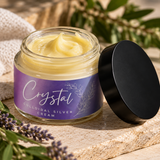
The cream combines silver with botanical oils, butters and aloe. The gel uses an aloe vera, glycerin and purified-water base. Both are for external use.
Handcrafted soaps
Explore unscented, floral, fresh and charcoal varieties. Each has its own fragrance and ingredient list; the coconut-oil soap base provides the cleansing format.
- Colloidal Silver Soap - Fragrance Free
- Colloidal Silver Soap - Lavender & Ylang Ylang
- Colloidal Silver Soap - Eucalyptus and Peppermint
- Colloidal Silver Soap - Forget-Me-Not
- Colloidal Silver & Activated Charcoal Soap – Lemongrass, Grapefruit & Black Pepper
- Limited Edition Frosted Rhubarb & Rose Colloidal Silver Soap
Sets and selections
Choose individual soap varieties in the trio, or check the mixed-liquid bundle for its current contents.
The ingredients around silver
Our silver cream combines silver with aloe, botanical oils and butters. Explore jojoba oil and murumuru butter to understand two parts of that emollient base.
The gel has a different texture, while soaps are designed to lather and rinse away. Fragrance, colour and the supporting ingredients vary between products. An unscented bar, an aromatic bar and a leave-on cream offer different experiences.
Use cosmetics only as directed on the individual label, avoid the eyes and stop if irritation occurs. A cosmetic silver product is not a replacement for care of an infection or wound.
Common questions
What is the difference between original and True Colloidal Silver?
The original listing names silver and steam-distilled water. True Colloidal Silver additionally names cinnamon bark extract used during botanical reduction and states 20 PPM. “True” is the name of that CHB product, not a universal certification or proof of a health benefit.
Does 99.999% describe the liquid’s concentration?
No. It describes the stated purity of the starting silver in our original liquid. PPM describes concentration in the finished liquid, while millilitres describe bottle volume. These figures are not interchangeable.
Are the silver cream, gel and soap the same formula?
No. The cream has an emollient botanical base, the gel has an aloe vera and glycerin base, and the soaps are rinse-off cleansing bars. They contain different supporting ingredients and have different directions.
Can colloidal silver be swallowed or nebulised?
This guide does not recommend swallowing or inhaling colloidal silver. Silver is not an essential nutrient, and ingestion can cause permanent skin discolouration called argyria. Do not use a retail silver liquid in a nebuliser or as a substitute for treatment.
How should silver products be stored?
Keep liquids and topical containers securely closed, away from direct sunlight and excessive heat. Follow each label’s expiry and storage information. Allow soap bars to drain and dry between uses.
Keep exploring
Continue through our minerals and colloids guide, explore copper and gold, or return to the complete ingredient library.
Background references: Royal Society of Chemistry: silver and colloidal silver information. Product descriptions refer to the current CHB listings; background references are not endorsements or tests of the finished products.
For complete ingredients, allergens, suitability and directions, read the current product label. A guide to one ingredient does not describe every possible effect of the finished preparation.
