
The Crystal ingredient library
Rosehip oil
Rose-derived botanical oil
Discover rosehip oil, its botanical origins and conditioning role in our Gold Face Cream, alongside jojoba, meadowfoam and plant butters.

Rosehip oil at a glance
- Ingredient familyBotanical cosmetic oil
- Plant connectionRose hips and their seeds
- Skincare roleSoftness and conditioning
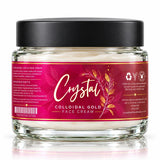
- In our rangeColloidal Gold Face Cream
What is rosehip oil?
Rosehip oil is a botanical ingredient used in facial oils, creams and other skincare blends. Its appeal lies in the soft, conditioned feel it contributes to a formula. In cosmetic language, this is an emollient role: helping skin feel smoother and more supple.
The name connects the oil to the rose hip, the fruiting structure that develops after a rose flowers. Cosmetic ingredients sold as rosehip oil can differ in their botanical source, plant part and processing. Reading the full ingredient name and specification gives more detail than the everyday name alone.
From rose blossom to autumn hip
Wild roses are scrambling shrubs with arching stems and open flowers. As the flowering season passes, their hips develop. Dog rose, Rosa canina, produces the familiar red, oval hips seen in many British hedgerows in autumn.
These fruits also have a place in the landscape beyond skincare. Birds feed on hips through the colder months, while the thorny growth provides shelter. Other roses, including sweet briar, belong to the same broad botanical story.
A hedgerow rose illustrates where the ingredient’s name comes from. It does not identify the species, growing country or processing method used for a particular cosmetic batch.
Understanding the ingredient name
On cosmetic ingredient lists you may encounter names such as Rosa Canina Seed Oil or Rosa Canina Fruit Oil. These are examples found in supplier specifications. They should be read as the stated identity of that ingredient, rather than treated as interchangeable wording for every oil.
Refining can adjust an oil’s colour and odour, making it easier to incorporate into a finished formula. Other grades may retain a more pronounced natural character. Terms such as organic, cold-pressed and unrefined each describe something specific; none should be assumed from a photograph or the common name.

What rosehip oil brings to a blend
Rosehip oil helps create a conditioning finish in skincare. It can be combined with other oils and richer butters to produce a texture suited to the finished product. The experience of using a cream depends on that balance, not on one featured ingredient.
- Softness: part of an emollient blend that leaves skin feeling conditioned.
- Spread: a liquid oil within a formula that also contains more solid ingredients.
- Texture: one contribution to the overall feel of a moisturiser.
For example, a flowing facial oil and a butter-rich cream can both contain rosehip while feeling quite different. The complete formula, the quantity applied and your own skin’s response determine which texture you enjoy.
Rosehip in our Gold Face Cream
Facial care
Colloidal Gold Face Cream
Rosehip joins jojoba, meadowfoam and black seed oils in our rich botanical moisturiser, alongside plant butters, colloidal gold and vitamin E. Neroli and frankincense provide the aromatic finish.
Explore Gold Face CreamBegin with a small amount on clean skin, as the cream’s directions describe. Its rich texture comes from the complete blend of oils and butters. It is for external use only.
The product page contains the current product information. Rosehips listed in other types of preparation are separate from the cosmetic oil covered here.
Looking after botanical skincare
Keep the finished cream cool, securely closed and away from direct sunlight or excessive warmth. Natural butters can soften as temperatures rise, so a hot windowsill is not a good place for the jar.
Use clean, dry fingertips or a clean spatula and follow the label’s storage and expiry guidance. A raw oil’s supplier shelf life does not establish the shelf life of every formula containing it. If a product develops an unexpected smell or other unusual change, check with us before continuing to use it.
Common questions about rosehip oil
Is rosehip oil the same as rose essential oil?
No. Rosehip oil is a botanical oil associated with the hips and seeds of roses. Rose essential oil is an aromatic flower-derived ingredient. They have different compositions and roles, so one name should not be substituted for the other.
Does rosehip oil make the cream smell of roses?
Rosehip oil is included for its conditioning role, not to create a rose perfume. Our Gold Face Cream’s aromatic ingredients are neroli and frankincense. The finished scent comes from the whole blend.
Does rosehip oil contain the same nutrients as fresh rosehips?
A fresh hip, a fruit powder, an extract and a cosmetic oil are different materials. Nutritional statements about the fruit do not establish the vitamin content of an oil or finished cream. Those details require the relevant specification.
Is every rosehip oil cold-pressed or organic?
No. Those terms refer to particular processing methods or certifications. Refined and other grades are available. Check the actual specification rather than assuming a grade from the words rosehip oil.
How should I introduce a rosehip-containing cream?
Choose by the complete ingredients and texture. Try a small amount on a small area first, avoid the eyes and stop if irritation occurs. Our Gold Face Cream is a rich moisturiser for external use; follow its own directions and storage guidance.
Keep exploring
Discover the other ingredients alongside rosehip: jojoba oil, meadowfoam seed oil, murumuru butter and gold.
Browse our oils and botanical butters guide, or return to the complete ingredient library.
Background reading: Kew’s wild rose guide, Croda’s rosehip ingredient profile and O&3’s refined seed oil specification. These describe botanical background and example grades; they do not identify CHB’s supplier.
For complete ingredients, allergens, suitability and directions, read the current product label. A guide to one ingredient does not describe every possible effect of the finished preparation.
