The Crystal ingredient library
Black seed oil
Nigella sativa seed oil
Explore the distinctive character of Nigella sativa seed oil, from cold pressing and traditional use to its place in simple oil routines and rich botanical skincare.

Meet Nigella sativa
Black seed oil is pressed from the small, dark seeds of Nigella sativa. Its distinctive aroma and flavour make it quite different from a neutral kitchen oil, while its rich feel has earned it a place in botanical skin and hair routines.
The seeds have a long history of culinary and traditional use across the Middle East, North Africa and parts of Asia. That heritage is part of the ingredient’s story. This guide focuses on understanding the oil itself and choosing the right preparation for your routine.
- Botanical nameNigella sativa
- Part usedSeeds
- Our standalone oil100% pure, cold-pressed seed oil
- Also in our rangeColloidal Gold Face Cream
You may see names such as black cumin, black seed or nigella. The botanical name is the clearest way to identify the ingredient: a similar common name does not always mean the same plant.
From seed to cold-pressed oil
Cold pressing uses mechanical pressure to release oil from the seeds. Our Black Seed Oil is listed as a single-ingredient, cold-pressed oil, with no added oils, fillers or synthetic fragrance.
A pressed seed oil carries the oil-soluble components of its source material. It is not the same as eating the whole seed, and it does not contain every part of the seed in the same proportions. The seed’s fibre, for example, is not a feature you should assume is retained in the bottled oil.
The oil discussed here is a fixed botanical oil. An essential oil, an isolated compound and a concentrated extract are different preparations. Their names may mention the same plant, but that does not make their composition or directions interchangeable.

A distinctive botanical character
Black seed oil is known for its pronounced, aromatic character. Natural oils can vary in colour and scent with the source seeds, processing and storage. A darker colour or stronger taste is not a reliable measure of quality or of a particular constituent.
When comparing bottles, begin with the information that can be checked: the botanical name, complete ingredient list, extraction description, intended use and storage instructions. “Pure” describes a product without other added ingredients; it does not mean that every bottle from every producer is chemically identical.
Choose a format you will find practical. A single oil gives you a simple ingredient list, while a finished cream combines several ingredients into one texture and application routine.
Understanding thymoquinone and our oil specification
Thymoquinone is one of the naturally occurring compounds in Nigella sativa seed oil. It is one constituent within a complex botanical oil, rather than another name for the whole ingredient.
Our supplier’s specification, version 3.1 dated 19 May 2025, sets a minimum thymoquinone content of 1.3%. The document also lists this as at least 13 mg/ml. These are the supplier’s stated specifications for the oil, rather than an individual batch analysis.
- Composition100% Nigella sativa seed oil
- ManufactureCold pressing followed by filtration
- Thymoquinone specificationMinimum 1.3%; also listed as ≥13 mg/ml
- Appearance specificationYellow to amber oily liquid
The specified fatty-acid profile includes linoleic acid at 55–67% and oleic acid at 20–30%. These describe ranges within the oil’s fatty-acid profile; they are not added ingredients.
Supplier declarations also describe the raw material as organically certified, suitable for vegans, and produced without solvents or preservatives. These statements concern the supplied ingredient and do not certify the finished Gold Face Cream as organic.
The thymoquinone figure applies to the standalone oil’s raw material. It must not be applied to the finished face cream, where black seed oil is one ingredient in a larger formula. A specification describes the required standard; a batch certificate records results for an identified batch. Contact us if you need batch-specific information.
Skin, hair and food: choosing the right use
In skincare, botanical oils contribute softness, glide and an emollient feel. Black seed oil is included in our Gold Face Cream as part of a blend with meadowfoam seed oil, jojoba and rosehip oil. The texture of the finished cream comes from the whole recipe, including its plant butters.
For the standalone oil, follow the bottle’s topical directions and start with a small amount on skin or scalp. Try a small area first, avoid the eyes and stop using it if irritation develops. A botanical origin does not mean every skin type will prefer the same oil.
For food use, follow the serving information supplied with the standalone product. Do not use the face cream as a food oil: it is a finished cosmetic for external use. This ingredient guide does not set a universal serving size or treatment course.
If you prefer a ready-made facial routine, the cream provides a richer format with its own application instructions. If you prefer a single ingredient, the bottled oil keeps that choice straightforward.
Looking after your bottle
Keep the oil tightly closed in a cool, dark place, away from direct sunlight and heat. Use clean, dry hands or utensils when handling it and avoid introducing water into the bottle. Return the cap after use rather than leaving the oil exposed.
Follow the best-before date and any additional instructions on the label. Packaging helps protect an oil, but it does not replace suitable storage. If you are unsure about a marked change in your bottle, contact us with its batch details instead of judging it from colour alone.
Black seed oil in the Crystal range
Single botanical oil
Black Seed Oil
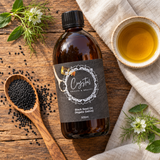
100% pure, cold-pressed Nigella sativa seed oil in a 100ml amber bottle. Choose this format for a simple, single-ingredient product and follow the bottle’s directions for your intended use.
Explore Black Seed Oil →
Finished facial moisturiser
Colloidal Gold Face Cream
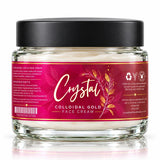
A rich botanical cream combining black seed oil with murumuru, kokum and cacao butters, other oils, colloidal gold, vitamin E, neroli and frankincense. Apply a small amount as directed; for external use only.
Explore Gold Face Cream →Frequently asked questions
What plant does black seed oil come from?
Black seed oil is pressed from Nigella sativa seeds. Checking the botanical name is useful because common names such as black cumin can be used inconsistently.
Is black seed oil an essential oil?
The cold-pressed seed oil described here is a fixed botanical oil. It is different from a concentrated essential oil or an isolated extract, so their directions should not be used interchangeably.
What does cold-pressed mean?
It describes mechanical pressing used to obtain oil from the seeds. It does not, by itself, establish a particular thymoquinone percentage or guarantee that every batch has identical composition.
How much thymoquinone is in Crystal Black Seed Oil?
The supplier specification for our oil sets thymoquinone at a minimum of 1.3%, also listed as at least 13 mg/ml. This is a specification for the supplied oil, not an individual batch certificate or a measurement of our finished Gold Face Cream.
Which Crystal products contain black seed oil?
It is sold as our single-ingredient Black Seed Oil and is also included in Colloidal Gold Face Cream. The cream is for external use and has its own full ingredient list and directions.
How should black seed oil be stored?
Keep the bottle tightly closed in a cool, dark place away from heat and direct sunlight. Follow the bottle’s best-before date and any additional storage instructions, and avoid introducing water or debris.
Explore further
Browse the ingredient library or explore the role of murumuru butter in our creams.
Sources: Kew’s botanical record for Nigella sativa and the published study Variation in the Composition and Quality of Nigella sativa Seed Oils. These provide botanical and compositional background. Details of our supplied oil are taken from the supplier’s specification, version 3.1 dated 19 May 2025, its manufacturing statement and its product declarations.
For complete ingredients, allergens, suitability and directions, read the current product label. A guide to one ingredient does not describe every possible effect of the finished preparation.
