The Crystal ingredient library
Iodine
Iodine and potassium iodide
Explore iodine’s natural origins, the difference between iodine and iodide, and how to read the information on a Lugol’s solution.

Iodine at a glance
- Element symbolI
- Atomic number53
- Nutritional roleA trace element used in thyroid hormones
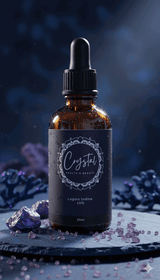
- Our concentrated formatLugol’s Iodine 15% Solution
What is iodine?
Iodine is a naturally occurring element with a distinctive place in the story of minerals and wellbeing. It is commonly called a trace mineral in nutrition because the body requires small amounts. It forms part of thyroid hormones, which help regulate the body’s use of energy.
The ingredient name appears in several settings: foods, nutrient blends and concentrated preparations. Understanding the form and amount is essential when comparing them. A familiar name on two labels does not mean the products are interchangeable.
A coastal connection and a colourful history
Iodine’s discovery is linked to seaweed. In 1811, Bernard Courtois observed violet fumes while working with seaweed ash in France. The element’s name comes from a Greek word associated with violet, reflecting that striking colour.
In its elemental form, iodine is a dark, shiny crystalline solid. In nature it also occurs in compounds, including iodides in seawater. Seaweeds can accumulate iodine, although their content varies.
Modern commercial iodine can come from natural brines and mineral deposits. A seaweed connection in the element’s history does not establish the source of a particular bottle; that requires the supplier’s specification.
Iodine, iodide and Lugol’s solution
Elemental iodine and potassium iodide are two ingredients named on our Lugol’s bottle. Potassium iodide is a salt containing iodide, the negatively charged form of iodine.
Lugol’s is a water-based preparation that combines the two. Our formula uses steam-distilled water and contains no alcohol, preservatives or additional fillers, as described in the product listing.
Other iodine preparations can have different ingredients and intended uses. An iodine tincture, a nutrient tablet and a Lugol’s solution should each be read according to their own label. A brown colour is not enough to identify the composition or strength.

Understanding strength and units
Our Lugol’s solution is labelled 15%. The product listing does not provide the separate quantities of elemental iodine and potassium iodide, or a verified amount per drop. Those details should not be filled in from another brand’s formula.
A percentage describes concentration according to a stated convention; a serving amount describes how much of a substance is supplied in a measured quantity. They answer different questions. Drop size also depends on the dispenser, so a drop count copied from a different bottle can be misleading.
- Read the full specification: check what the strength refers to.
- Keep units distinct: one milligram equals 1,000 micrograms.
- Check the preparation: use the instructions supplied for that product.
This guide does not set a drop schedule or a dilution recipe. A high-strength solution needs individual guidance rather than a general serving suggestion.
Where iodine appears in our range
Concentrated preparation
Lugol’s Iodine 15% Solution
Elemental iodine and potassium iodide in steam-distilled water, supplied in a 50 ml amber glass bottle with a dropper. Read the full product information and supplied directions.
Product bundle
Complete Iodine Companion Bundle
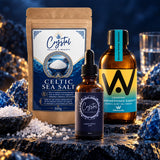
The Lugol’s bottle together with Celtic sea salt, Liposomal Advanced Immune Support and a downloadable guide. The bundle brings products together for convenience; it does not establish a universal iodine programme.
Iodine listed within a wider blend
Probiotic formulations
Kids Probiotic and Sustain Probiotic both list iodine among their ingredients. Their listings do not give a quantified iodine contribution per serving. Follow each formulation’s own information and avoid treating it as a substitute for a specified iodine preparation.
The wider nutritional context
A thoughtful approach to nutrition considers the whole diet and any overlapping supplements. Food sources of iodine include fish, dairy foods and eggs; seaweed content can be particularly variable. An ingredient’s presence does not tell you the amount in a serving.
Selenium is another nutrient often discussed alongside iodine. They have distinct roles, and adding companion products does not make an excessive iodine intake safe. Check the individual amounts rather than assuming a bundle needs extra products added to it.
Too little and too much iodine can both affect thyroid function. Seek advice from a qualified healthcare professional before using concentrated iodine, particularly with a thyroid condition, medication, pregnancy or breastfeeding, or when considering it for a child.
Looking after the bottle
Keep the original amber bottle securely closed and store it somewhere cool and dark, away from children. Follow its date and storage instructions. Keep the dropper clean and avoid contact with other liquids.
Iodine can stain skin, clothing and worktops. Open the bottle carefully over a protected surface. If the seal is damaged or the appearance changes unexpectedly, contact us before use. Storage care preserves the product; it does not establish a suitable dose.
Common questions about iodine
What is the difference between iodine and iodide?
Iodine is the element. Iodide is its negatively charged ion, found in compounds such as potassium iodide. A Lugol’s preparation contains both elemental iodine and potassium iodide in water.
Does CHB’s Lugol’s iodine contain alcohol?
No. Our listed formula contains elemental iodine, potassium iodide and steam-distilled water. It is supplied as a 50 ml bottle labelled 15%.
Can I calculate the amount per drop from the 15% label?
Not reliably from that number alone. You need the exact concentration specification, what the percentage refers to, and a verified drop volume. Our product page does not provide an iodine-and-iodide milligram split or a per-drop dose.
Are the probiotics another form of Lugol’s solution?
No. Kids Probiotic and Sustain Probiotic list iodine among many ingredients, but they are separate formulations. Their listings do not state an iodine amount per serving, so they should not be treated as equivalent to Lugol’s solution or as a quantified iodine supplement.
Is more iodine always better?
No. Iodine is needed in small amounts, and too much can disrupt thyroid function. A concentrated solution should not be treated as an ordinary food-level serving or used to self-treat thyroid symptoms.
How should Lugol’s iodine be stored?
Keep it in its original amber bottle, tightly closed, in a cool, dark place and out of reach of children. Follow the label’s expiry guidance, protect surfaces from staining and do not use a bottle with a damaged seal or an unexpected change in appearance.
Keep exploring
Browse minerals and colloids, read our selenium guide, or return to the complete ingredient library.
Background reading: Royal Society of Chemistry: iodine and Office of Dietary Supplements: iodine. These provide general element and nutritional information, not dosing instructions for CHB’s concentrated solution.
For complete ingredients, allergens, suitability and directions, read the current product label. A guide to one ingredient does not describe every possible effect of the finished preparation.
