The Crystal ingredient library
Selenium
Trace mineral
Explore selenium, an essential trace mineral, from its food sources and supplement forms to its place in our glutathione liquid and combined formulations.

Selenium at a glance
- Element symbolSe
- Atomic number34
- Nutrient familyEssential trace mineral
- Label unitsUsually micrograms: µg or mcg
What is selenium?
Selenium is a naturally occurring element needed in small amounts. In nutrition it is called a trace mineral. It is incorporated into proteins known as selenoproteins, including enzymes involved in thyroid hormone metabolism and protection against oxidative damage.
Its role in the body explains why it appears in several nutritional blends. The useful question when comparing products is how much selenium each serving provides, alongside the other ingredients in that formula.
An element with a lunar name
The name selenium comes from Selene, the Greek name associated with the Moon. Its chemical symbol is Se and its atomic number is 34. The element was identified in 1817 by the Swedish chemist Jöns Jacob Berzelius.
Elemental selenium can occur in different physical forms, including grey and red forms. That appearance is different from a finished nutritional liquid containing a selenium compound. A photograph of the element helps tell its story, but cannot represent the quantity or form inside a supplement.
Selenium in the food landscape
Food sources include fish, meat, eggs and Brazil nuts. Plant-food selenium content varies with growing conditions and soil, so the same food does not always contain an identical amount.
Brazil nuts can be particularly rich in selenium, but their content is variable. They should not be used as an exact dosing measure or eaten in large quantities to chase a selenium target.

Understanding the forms on a label
Supplement ingredient lists may name sodium selenite, sodium selenate, selenomethionine or selenium-enriched yeast. These describe forms used to supply selenium. The ingredient name and the nutrient amount are separate pieces of information.
In our range, the probiotic listings name sodium selenate. The iodine companion bundle describes the selenium in Advanced Immune Support as sodium selenite. The glutathione liquid listing names selenium without specifying its compound, so check the bottle for that detail.
A term such as “liposomal” describes the formulation approach. It does not state the selenium amount and does not, on its own, establish a particular absorption percentage for a finished product.
Where to find selenium in our range
Glutathione and selenium
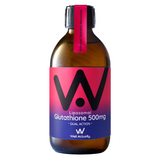
Liposomal Liquid Reduced L-Glutathione & Selenium
A cherry-flavoured liposomal liquid supplied in a 250 ml bottle. Reduced L-glutathione and selenium are both named in the formula. Use the serving and nutrient quantities printed on the bottle.
Combined nutrient formula
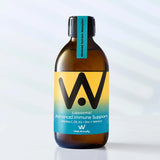
Liposomal Advanced Immune Support
A tropical zest liquid combining selenium and zinc with vitamins C, D3 and K2. This is a multi-ingredient product, so compare the complete nutrient panel when considering other supplements.
Selenium within a wider blend
Probiotic formulations
Kids Probiotic and Sustain Probiotic list selenium as sodium selenate among their ingredients. Neither current listing provides a selenium quantity per serving; they should not be treated as interchangeable with a quantified selenium supplement.
Product bundle
Complete Iodine Companion Bundle
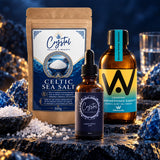
This includes Advanced Immune Support, Lugol’s Iodine 15%, Celtic sea salt and a downloadable guide. Selenium comes from the Advanced Immune Support bottle, rather than an additional selenium-only product.
Reading amounts without doubling up
Start with the amount of selenium per recommended serving. Then check how much liquid, or how many capsules, that serving represents. Bottle volume and a “high strength” description cannot replace those figures.
- Check the unit: µg and mcg both mean micrograms; 1 mg equals 1,000 micrograms.
- Read every formula: selenium may already be present in a combined product.
- Count the bundle once: buying a product within a bundle does not make it a different formulation.
- Ask about missing information: an ingredient mention does not establish a serving amount.
Excess selenium can be harmful, including causing hair and nail changes. Follow the product directions and avoid adding extra selenium simply because another product has a different headline ingredient.
Why selenium is discussed alongside iodine
Iodine forms part of thyroid hormones; selenium-containing enzymes have roles in their metabolism. This connection is why the two nutrients are often discussed together.
That relationship does not establish a universal ratio or mean that everyone needs both as supplements. It also does not make a high iodine intake safe. Explore our iodine guide for the distinction between nutritional context and a concentrated Lugol’s preparation.
If you have a thyroid condition, take medication, are pregnant or breastfeeding, or are choosing supplements for a child, obtain individual advice from a qualified healthcare professional.
Caring for liquid supplements
Keep each product in its original container and follow its own storage instructions, including any refrigeration or use-after-opening directions. Different liquid formulations can have different requirements.
Close the bottle after use, keep the measuring utensil clean and store it out of reach of children. Use the expiry information on the actual bottle rather than assuming all selenium-containing products share a shelf life.
Common questions about selenium
Is selenium a vitamin or a mineral?
Selenium is an essential trace mineral. It is a different nutrient from vitamins, even when they appear together in the same supplement.
What is the difference between sodium selenite and sodium selenate?
They are different selenium-containing compounds. Both names occur in supplement ingredient lists. Read the exact form and the declared selenium amount rather than treating the names as a dose.
Is selenium the same as glutathione?
No. Selenium is an element, while glutathione is a molecule made from amino acids. They are separate ingredients in our Liposomal Liquid Reduced L-Glutathione & Selenium product.
Which product supplies selenium in the iodine companion bundle?
Liposomal Advanced Immune Support supplies the selenium within the bundle, alongside vitamins C, D3 and K2 and zinc. The bundle does not include a separate selenium-only bottle.
Do the probiotics provide a measured selenium serving?
Kids Probiotic and Sustain Probiotic list selenium as sodium selenate, but their current product listings do not state its amount per serving. The ingredient list alone cannot establish a quantified selenium contribution.
Can I combine several selenium-containing supplements?
Check the total selenium across every product before combining them. Excess selenium can be harmful, so do not assume that products with different names supply different nutrients. Follow each label and seek personalised advice if the amounts or suitability are unclear.
Keep exploring
Continue with glutathione, iodine and zinc, or return to our complete ingredient library.
Background reading: Royal Society of Chemistry: selenium, selenium nutrient background and food sources and excess intake. These provide general information; product amounts come from the individual labels.
For complete ingredients, allergens, suitability and directions, read the current product label. A guide to one ingredient does not describe every possible effect of the finished preparation.
