
The Crystal ingredient library
Vitamin B12
Cobalamin
Explore vitamin B12, also known as cobalamin. Learn about food sources, compare our oral spray and B Complex liquid, and understand the units and serving information on a supplement label.

What is vitamin B12?
Vitamin B12, also known as cobalamin, is one of the B vitamins. It contributes to normal red blood cell formation and nervous system function, and is involved in making DNA.
In our range, B12 appears in a dedicated oral spray and in a broader B Complex liquid. Understanding the difference helps you compare the complete formulas.
- Also known asCobalamin
- Label unitsMicrograms: mcg or µg
- Dedicated formatLiposomal oral spray
- Also included inLiposomal B Complex liquid
B12 in everyday food choices
Fish, meat, eggs and dairy foods naturally provide B12. Fortified foods can also supply it; check the label rather than assuming every plant drink, cereal or nutritional yeast contains added B12.
For people eating little or no animal food, reliable B12 sources deserve particular attention. Dietary intake and absorption both matter, so a supplement choice should reflect individual circumstances.

Understanding the names on a B12 label
Labels may name forms such as methylcobalamin, cyanocobalamin or adenosylcobalamin. These identify forms of the vitamin, while words such as spray, liquid and capsule describe the product format.
Our spray listing describes an active form of B12 but does not explicitly name it in the current description. Check the bottle or ask us for the current ingredient panel rather than inferring the form from the product name.
Likewise, the B Complex listing names B12 among several B vitamins without giving its individual amount. The full supplement panel is the right place to compare nutrient quantities.
What does liposomal mean here?
“Liposomal” describes a formulation approach using phospholipid structures to carry ingredients. The B12 spray listing identifies sunflower-derived phospholipids.
This term is separate from the amount of B12 in a serving. It does not tell you how many sprays to use, which flavour to choose or the nutrient amounts in the B Complex liquid.
When comparing products, start with the vitamin form, labelled amount and serving instructions. A delivery-format description alone does not establish that one product will work better for an individual.
Products in our range containing B12
Dedicated B12 formula
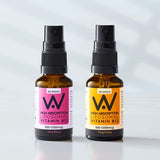
Vitamin B12 Liposomal Oral Spray
A B12-focused spray listed in Truly Fruity and Very Berry flavours. The current description identifies sunflower-derived phospholipids and describes the product as suitable for vegans and vegetarians.
The title includes a 300–1200 mcg range, but the description does not explain the amount per spray or how that range relates to a daily serving. Follow the current bottle label and check the directions for your selected version.
Explore the B12 spray →
Multiple B vitamins
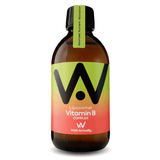
Liposomal Vitamin B Complex Liquid
A broader formula listing B1, B2, B3, B5, B6 and B12. Choose it by its complete ingredient panel and directions, rather than treating it as the same formula as the dedicated spray.
The current description does not declare a B12 amount per serving. Contact us if you need the current panel before choosing.
Explore the B Complex liquid →Micrograms, milligrams and serving sizes
B12 quantities are commonly written in micrograms. “mcg” and “µg” mean the same unit. One milligram equals 1,000 micrograms, so the unit matters when reading a label.
Check whether an amount refers to one spray, one measured liquid serving or the total daily serving. These are not necessarily the same thing.
Also distinguish the bottle’s liquid volume from its B12 content. Millilitres describe the amount of liquid; micrograms describe the amount of the vitamin. A larger bottle does not automatically mean more B12 per serving.
If you use several supplements, check their labels for overlapping B12 and other B vitamins. Keep a note of the complete daily servings rather than comparing product names alone.
Using and storing your chosen format
Follow the directions on the particular bottle you receive, including any instructions for shaking, priming a spray or measuring a liquid. Do not transfer directions between the spray and the B Complex.
Keep the nozzle or dropper clean, replace the cap after use and follow the label’s storage and use-after-opening instructions. Retain the batch details and keep supplements out of reach of children.
If you suspect a B12 deficiency, seek assessment so its cause and appropriate treatment can be established. A product-format guide cannot determine whether a spray is suitable treatment for an individual.
For a current ingredient panel, serving clarification or product query, contact us.
Vitamin B12 questions answered
What is vitamin B12?
Vitamin B12, also called cobalamin, is a B vitamin involved in normal red blood cell formation and nervous system function.
Which products contain B12?
Our Vitamin B12 Liposomal Oral Spray and Liposomal Vitamin B Complex Liquid both list B12.
Is B Complex the same as a B12 spray?
No. B Complex includes several B vitamins, while the spray is a B12-focused product. Their formulas and directions differ.
Do mcg and µg mean the same thing?
Yes. Both mean micrograms. One milligram equals 1,000 micrograms.
How much B12 is in one spray?
The current product description does not state the amount per spray. Check the bottle label or contact us for the current panel before choosing a serving.
Can I use the same directions for both products?
No. Follow the label for the specific spray or liquid, including its measuring and storage instructions.
Explore the nutrient library
Continue with vitamin C, vitamin D3 and K2 and CoQ10, or browse the full Learn ingredient library.
For complete ingredients, allergens, suitability and directions, read the current product label. A guide to one ingredient does not describe every possible effect of the finished preparation.
