
The Crystal ingredient library
CoQ10
Coenzyme Q10
Discover coenzyme Q10, the difference between ubiquinone and ubiquinol, and how to read the serving information on our liposomal liquid.

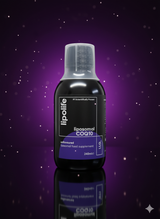
CoQ10 at a glance
- Full nameCoenzyme Q10
- Related formsUbiquinone and ubiquinol
- Our formatLiposomal liquid
- Listed amount200 mg per 5 ml serving
What is coenzyme Q10?
Coenzyme Q10 is a substance naturally present in the body. It has a role in the processes through which cells produce usable energy, which is why it is often discussed in nutrition and wellbeing.
A coenzyme helps enzymes carry out their work. CoQ10 is associated with mitochondria, the structures inside cells involved in producing ATP, a molecule used to transfer energy. Its part in this process is to carry electrons between components of the energy-producing system.
This biological role explains interest in the ingredient. It does not establish that taking a supplement will resolve tiredness or produce an immediate feeling of extra energy. The ingredient, the finished formula and a person’s needs are separate considerations.
Ubiquinone and ubiquinol: understanding the names
You may see two names when comparing CoQ10 products: ubiquinone and ubiquinol. These describe different oxidation states of the same coenzyme. Ubiquinone is the oxidised form; ubiquinol is the reduced form. The body can convert between them.
“Reduced” here is a chemistry term. It does not mean a smaller serving or a weaker product. Likewise, the word CoQ10 by itself does not tell you every detail about a particular formulation.
Our product listing currently states Coenzyme Q10 without identifying which form is used. We therefore keep that distinction open rather than assigning a form from a photograph, colour or product name.

What does liposomal CoQ10 mean?
Our CoQ10 is supplied as a liposomal liquid. This describes a formulation approach using lipid-based structures, rather than a conventional tablet or capsule. For customers who prefer a measured liquid, the format is a practical part of the choice.
The word “liposomal” is not a measurement of how much CoQ10 a serving contains. It also does not provide a verified absorption percentage for a particular bottle. Compare the declared ingredient amount, the complete formulation and the directions together.
Liquid products can have different accompanying ingredients and storage requirements. Use the label for the specific product instead of transferring instructions from another liposomal supplement.
CoQ10 in our range
Liquid food supplement
Liposomal CoQ10 200 mg
Our listed formula supplies 200 mg of Coenzyme Q10 per 5 ml serving. It is described as vegan, soy-free and gluten-free, and is supplied in a liquid format.
The full accompanying ingredients are on the bottle. Check them whenever you purchase, particularly if an allergy or dietary requirement affects your choice.
Explore Liposomal CoQ10 →How to read the serving information
Two numbers do different jobs on this label: 200 mg describes the CoQ10 amount and 5 ml describes the liquid serving volume. A bottle’s total volume is a separate figure. Comparing only the largest number on the front of two products can therefore give the wrong impression.
- Start with the serving: check the volume specified on the label.
- Read the active amount: compare CoQ10 in equivalent labelled servings.
- Check the form: look for an explicit ubiquinone or ubiquinol declaration if that matters to your choice.
- Review other products: a combined supplement may already contain CoQ10.
Use an appropriate measuring device for the volume on the label rather than estimating with an ordinary household spoon. Follow the bottle directions, including any instruction to shake before use.
A considered approach to use
A supplement is one part of a wider routine, alongside food, rest and everyday habits. Persistent or unexplained tiredness deserves individual assessment rather than an assumption that CoQ10 is missing.
CoQ10 can interact with medicines, including warfarin and insulin, and may not suit some cancer treatments. Ask your pharmacist or prescriber before combining it with medication. Obtain professional advice during pregnancy or breastfeeding, or if you are under medical supervision.
Some people experience digestive upset or difficulty sleeping with CoQ10. If it does not agree with you, stop and seek advice. Do not exceed the serving directions or change prescribed treatment on the strength of an ingredient guide.
Looking after your liquid
Keep the container securely closed in a cool, dry place away from direct sunlight and out of reach of children. Follow any additional storage, refrigeration or use-after-opening instruction printed on your bottle.
Keep the measuring utensil clean and avoid introducing other liquids into the container. Use the expiry information on the packaging. If the seal is damaged or you are unsure about a change in appearance, contact us before using it.
Common questions about CoQ10
What does CoQ10 stand for?
CoQ10 is short for coenzyme Q10, a substance made by the body that participates in cellular energy processes.
Are ubiquinone and ubiquinol the same thing?
They are related forms of coenzyme Q10. Ubiquinone is the oxidised form and ubiquinol is the reduced form. The body interconverts them as part of their biological role.
Which form is in CHB’s Liposomal CoQ10?
Our current listing names Coenzyme Q10 but does not specify ubiquinone or ubiquinol. Check the bottle or ask us for the current specification before choosing on that basis.
How much CoQ10 is in the liquid?
The listed product provides 200 mg of Coenzyme Q10 per 5 ml serving. This is an amount per serving, not the bottle volume. Follow the directions on the bottle you receive.
Is this CoQ10 vegan?
Our Liposomal CoQ10 is listed as vegan, soy-free and gluten-free. Check the current bottle label for the complete ingredient and allergen information.
Can CoQ10 be taken with medicines?
Check with your pharmacist or prescriber before starting it. CoQ10 may interact with warfarin and insulin, and may be unsuitable alongside some cancer treatments. Do not change prescribed medicines to accommodate a supplement.
Keep exploring
Learn about other ingredients in our library: glutathione, selenium and zinc. These are separate ingredient guides, not a recommendation to combine products. Browse the complete Learn library for more.
Background reading: Oregon State University’s CoQ10 overview and CoQ10 research and interaction information. Product specifications above come from the CHB listing.
For complete ingredients, allergens, suitability and directions, read the current product label. A guide to one ingredient does not describe every possible effect of the finished preparation.
