
The Crystal ingredient library
D-mannose
A simple sugar
Explore D-mannose, a simple sugar supplied in our range as a single-ingredient powder. Learn about its identity, different formats and practical label guidance.

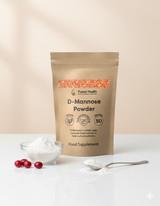
D-mannose at a glance
- Ingredient familySimple sugar
- Technical termMonosaccharide
- In our rangeSingle-ingredient powder
- Pack size50g
What is D-mannose?
D-mannose is a simple sugar, or monosaccharide. The word describes a single sugar unit. It occurs naturally in small amounts in some fruits and is also supplied as an isolated ingredient in powders and other preparations.
Within our range, D-mannose is sold as a single-ingredient powder. Its name identifies the substance inside the pack, while the pack weight and directions tell you how that particular product is supplied and used.
The “D” is part of the molecule’s chemical name. It is not a reference to vitamin D, a strength rating or a serving size. Keeping the full name together helps distinguish it from other ingredients you might encounter in a supplement range.
D-mannose, fruit and cranberry extracts
D-mannose is often discussed alongside cranberries because this sugar occurs in some fruits. However, a fruit, a fruit juice, a cranberry extract and a separate D-mannose powder have different compositions.
A whole fruit contains a mixture of substances. An extract has its own preparation and specification. Our powder is identified by the single ingredient D-mannose, rather than by a fruit name.
This distinction also matters when considering where a product comes from. The fact that an ingredient occurs in a fruit does not identify the manufacturing source of every supplement containing it. A source such as cranberry, corn or birch should only be stated when it is confirmed for the particular product.

Understanding powder and blended formats
A single-ingredient powder makes the named ingredient straightforward to identify. Other products may combine D-mannose with botanical extracts or supply it in capsules or tablets. Read the complete formula rather than assuming that all products with D-mannose in their title are equivalent.
When comparing formats, look at the amount of the named ingredient in a serving. The total weight of a blended powder or tablet can include other ingredients. A larger pack does not, by itself, mean a stronger serving.
D-mannose is a sugar in its own right. “Single ingredient” does not mean “sugar-free”, and a description such as “no added sugar” should not be taken to mean the ingredient contains no sugar.
D-mannose in our range
Single-ingredient powder · 50g
D-Mannose Powder
A 50g pack with D-mannose as its single listed ingredient. The product page provides the current specification; follow the serving and preparation directions on the pack you receive.
Explore D-Mannose PowderThe 50g quantity describes the total contents. It is not a serving recommendation. The number of servings depends on the amount stated on the label, so check that detail when planning an order.
If you need sourcing, allergen or current label information before ordering, contact us for the specific details rather than relying on a general ingredient description.
Reading the label and storing the powder
Check the ingredient, serving, preparation instructions and expiry information each time you open a new pack. Follow those directions instead of borrowing a scoop or serving from a different powder.
- Measure as directed: a household teaspoon is not a reliable substitute for a stated weight.
- Keep it dry: use a clean, dry utensil and avoid splashes reaching the contents.
- Close after use: keep the original labelled pack securely closed and out of reach of children.
- Check changes: ask before use if the packaging is damaged or the contents appear unexpectedly changed.
Do not exceed the stated serving. Check suitability before use if you are pregnant, breastfeeding, taking medicines or managing a health condition, including diabetes. An ingredient’s natural occurrence does not establish suitability for everyone.
A note on urinary wellbeing
D-mannose is widely discussed in relation to urinary wellbeing, but that interest should not be treated as proof that a powder prevents or treats infection. A 2024 randomised trial involving 598 women found no significant preventive benefit over placebo for the study’s main outcome.
Our guide explains the ingredient and product format. If you have urinary symptoms, seek appropriate assessment rather than relying on a supplement. Fever, shivering, pain in the back below the ribs, blood in urine or symptoms that worsen quickly need urgent advice.
Research background: the 2024 D-mannose trial. Its findings relate to the population and prevention question studied.
Common questions about D-mannose
What is D-mannose?
D-mannose is a simple sugar, also called a monosaccharide. It occurs in small amounts in some fruits and is available as a separate ingredient. Our product supplies it as a single-ingredient powder.
Is D-mannose the same as cranberry powder?
No. D-mannose names a specific sugar. Cranberry powder and cranberry extracts contain material derived from the fruit and have their own specifications. The names do not describe interchangeable ingredients.
Does D-mannose contain sugar?
D-mannose is itself a type of sugar. A single-ingredient D-mannose powder should not be described as sugar-free simply because it has no other sugar added. Check suitability if you need to manage your sugar intake.
What is in the Crystal Health & Beauty product?
Our D-Mannose Powder contains one listed ingredient, D-mannose, in a 50g pack. Follow the serving, preparation and storage information on your current pack.
How much D-mannose should I take?
Use the serving printed on the pack. The 50g figure is the total pack weight, not a daily serving. Do not copy a dose from another product, a research study or an online routine.
Can I rely on D-mannose for urinary symptoms?
No. This powder is not a treatment for an active urinary infection. Get appropriate assessment for urinary symptoms, and seek urgent help for fever, shivering, pain in the back below the ribs, blood in urine or rapidly worsening symptoms.
Keep exploring
Browse our vitamins and other nutrients library, or explore other single-ingredient formats in the MSM and creatine monohydrate guides. These ingredients have different identities and directions; the links are for learning about the range.
Return to the complete Learn ingredient library for oils, minerals, botanicals and formulation ingredients.
For complete ingredients, allergens, suitability and directions, read the current product label. A guide to one ingredient does not describe every possible effect of the finished preparation.
