
The Crystal ingredient library
Kali Mur
No. 5 · Potassium chloride
Explore Kali Mur No. 5, also known as potassium chloride or Kali muriaticum, with traditional context, comparisons and practical label guidance.

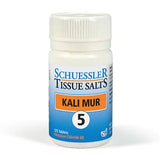
What is Kali Mur?
Kali Mur is the short name for potassium chloride in the Schüssler tissue salt tradition. It is No. 5 in our range, and you may also see the name Kali muriaticum in traditional reference material.
The familiar abbreviation is useful once you know what it represents. This guide explains its traditional context, how it differs from similarly named salts and which details to check when choosing a finished preparation.
- Short nameKali Mur
- Mineral namePotassium chloride
- Also known asKali muriaticum
- Number in our rangeNo. 5
Kali Mur in the tissue salt tradition
Traditional tissue salt literature associates Kali Mur with glandular and mucous-membrane themes. The title “glandular tonic” reflects this historical place in the system and explains wording you may encounter on product listings or in reference books.
These associations are part of the traditional framework. They do not establish that a tissue salt tablet treats swollen glands, clears congestion or corrects a medical condition. A traditional heading is a way to organise the literature, rather than a diagnosis or an individual treatment plan.
For someone exploring the twelve salts, the ingredient name is the best starting point. Keep it alongside the exact preparation and directions on the pack, so that a familiar title is not mistaken for a complete description of the product.

Kali Mur and similarly named salts
Several tissue salts share part of their names. Reading both parts helps you distinguish them:
- Kali Mur is potassium chloride.
- Kali Phos is potassium phosphate.
- Kali Sulph is potassium sulphate.
- Nat Mur is sodium chloride.
The three “Kali” salts have different second parts, while Kali Mur and Nat Mur have different first parts. They are distinct preparations, even when traditional discussions place them near one another.
This comparison helps you read the ingredient library and recognise labels. It is not a recommendation to combine these salts or substitute one for another.
Understanding numbers and preparation details
The salt number, preparation strength and tablet count each describe something different. No. 5 identifies Kali Mur in this range. A potency or dilution notation describes the preparation, while the tablet count tells you how many tablets are supplied.
The number 5 does not mean five tablets. Neither the number nor a potency notation is a nutritional potassium amount in milligrams. A tissue salt preparation should not be treated as a way to replace dietary potassium or correct a potassium deficiency.
Our current individual product description does not specify the complete tablet base or dilution. Those details should be checked on the current pack, rather than inferred from a different brand, market or format.
Find Kali Mur in our range
Our current collection includes this individual Kali Mur preparation. Visit the product page for purchasing information and check the finished packaging for its full directions.
Individual tissue salt · No. 5
Kali Mur No. 5
A potassium chloride tissue salt in tablet form, for those exploring Kali Mur within the Schüssler tradition. Its individual format makes the salt identity straightforward to recognise.
View Kali Mur tablets and product details →Choosing and caring for your tablets
Read the full ingredients, including the tablet base and any allergen information. If you avoid lactose, dairy or another ingredient, the mineral name alone cannot tell you whether the finished product meets your needs. Ask us to check the label before ordering if a detail is unclear.
Follow the amount, frequency and method of use on the finished pack, including any age guidance. Check individual suitability with an appropriate practitioner during pregnancy or breastfeeding, when taking medication or when choosing for a child. Persistent or worsening symptoms deserve individual assessment.
Store in a cool, dry place away from sunlight and heat. Keep the container tightly closed and out of reach of children. Retaining the original packaging keeps the directions and batch information available.
Kali Mur questions answered
What is Kali Mur?
Kali Mur is potassium chloride in the Schüssler tissue salt tradition. It is No. 5 in our range and may also be called Kali muriaticum.
Why is Kali Mur called a glandular tonic?
Glandular tonic is a traditional descriptive title used for Kali Mur. It explains its place in tissue salt literature, rather than demonstrating that the tablets treat a glandular condition.
Is Kali Mur the same as Kali Phos?
No. Kali Mur is potassium chloride, while Kali Phos is potassium phosphate. They are separate preparations within the tissue salt system.
Is Kali Mur the same as Nat Mur?
No. Kali Mur is potassium chloride and Nat Mur is sodium chloride. The shared Mur abbreviation does not make them interchangeable.
Does No. 5 mean five tablets?
No. It identifies Kali Mur in this range. Follow the amount, frequency and method stated on the finished pack.
Is Kali Mur a potassium supplement?
A tissue salt should not be assumed to provide a nutritional dose of potassium. The salt number and potency notation are not a potassium amount in milligrams. Check the complete label for the preparation details.
Continue exploring
Explore Ferr Phos and Calc Sulph for more ingredient guides within the tissue salt range. You can also return to the Learn ingredient library to browse the wider collection.
For help checking the details on a current pack, contact Crystal Health & Beauty.
For complete ingredients, allergens, suitability and directions, read the current product label. A guide to one ingredient does not describe every possible effect of the finished preparation.
