© 2023 Crystal Health & Beauty.

The Hidden History of Colloidal Gold

From Root To Crown · A Crystal special

They did not set gold aside because it failed.

Egyptians drank from gold. Faraday made metal in water the colour of a ruby. Zsigmondy proved the colour was particles and took a Nobel. The clinic used it for nerves and glands, not germs. Then the patent age wanted something it could own. This is the other record.

True colloid 40 PPM UK workshop
Scroll the centuries
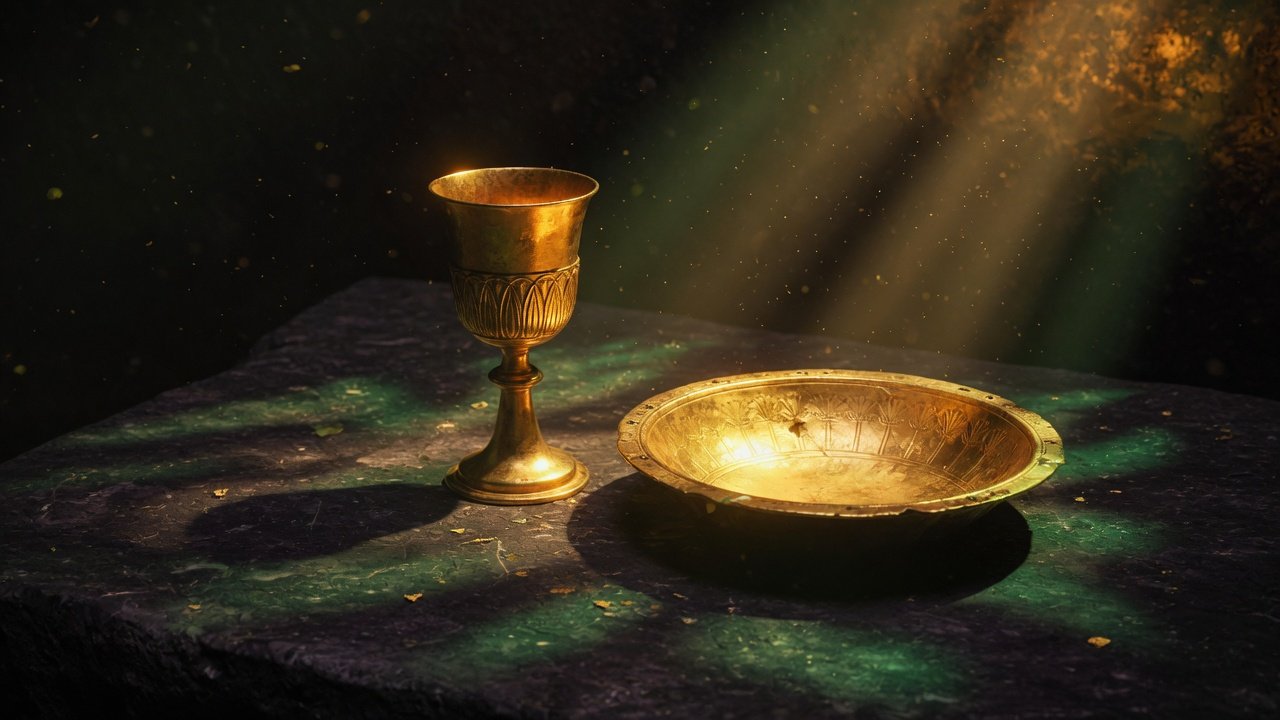
Ancient gold drinking vessel The cup

Egypt · Ayurveda · the soulAntiquity

Elixir of the gods, metal in the cup

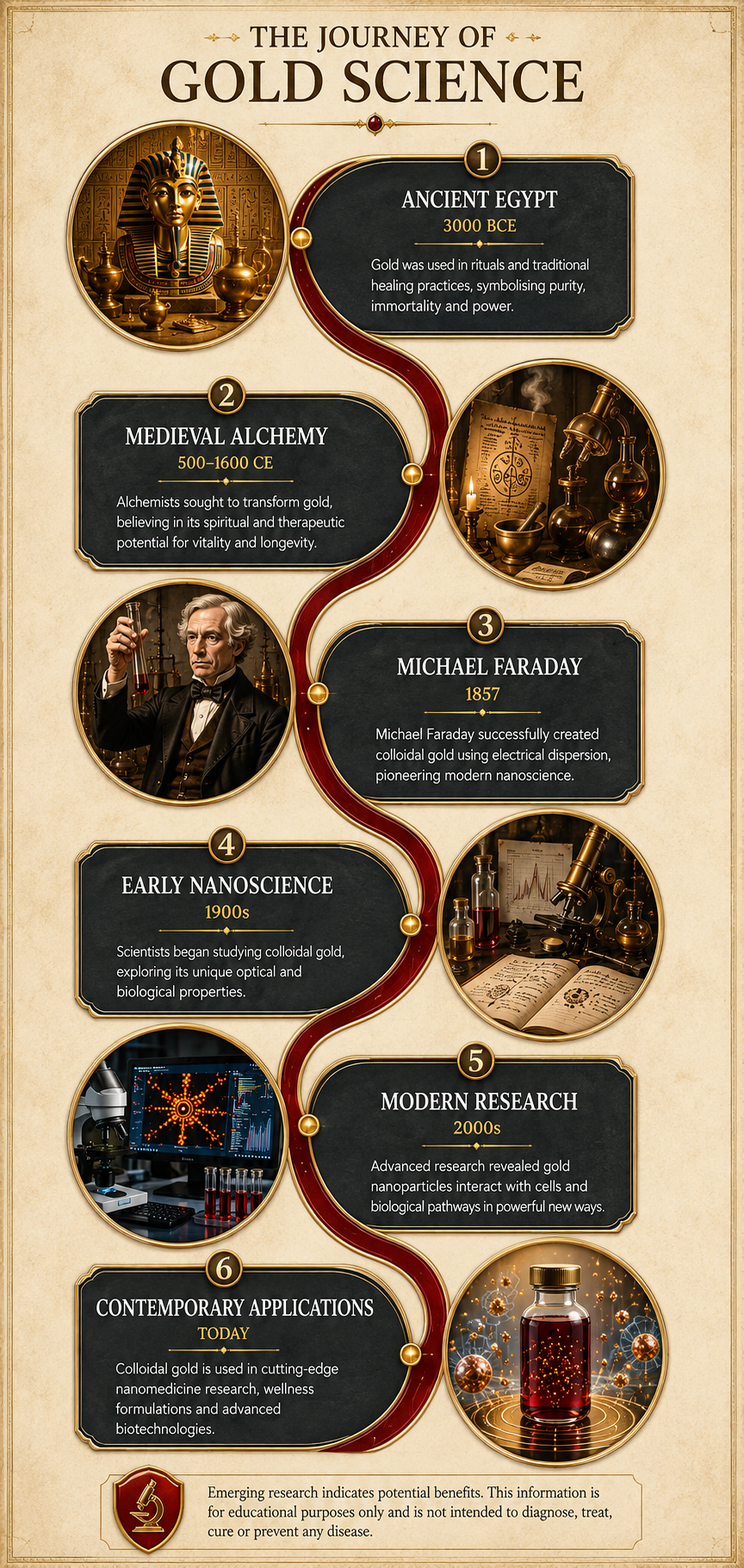
Gold was never only money. Egyptians believed it had medicinal property. The old books call it the elixir of the gods: transformation of the soul, mind, body and spirit — more than wealth. In Ayurveda the metal is Swarna, taken as bhasma, an ash, or as a suspension, for heat in the tissues and for repair when it is made as the old books say. The cup came first. The laboratory named it later.

It is not silver’s job. Silver kept water sweet and wounds from turning. Gold’s record is different: glands, nerves, the heart’s weather — melancholy, will, the warmth mechanism. Same family of metals in water. Different work.
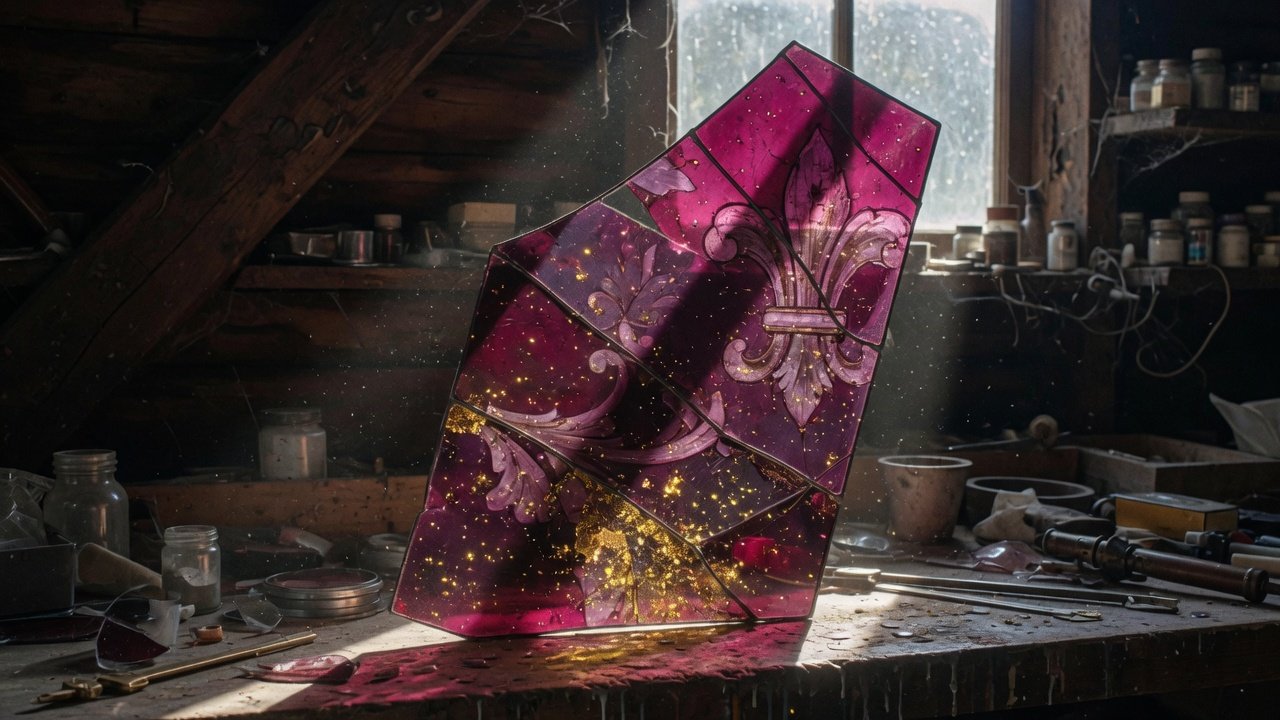
Ruby purple gold glass Cassius

Gold in glass1650s

Purple of Cassius

Seventeenth-century glassmakers dissolved gold and struck a ruby-purple that would not fade. Glauber’s generation knew the colour. They did not yet have the word colloid. The purple was gold as particles in the melt — Faraday’s hydrosol, trapped in glass. Zsigmondy, two centuries on, showed Purple of Cassius was colloidal gold and stannic acid, and took the 1925 Nobel for seeing what the glass already knew.

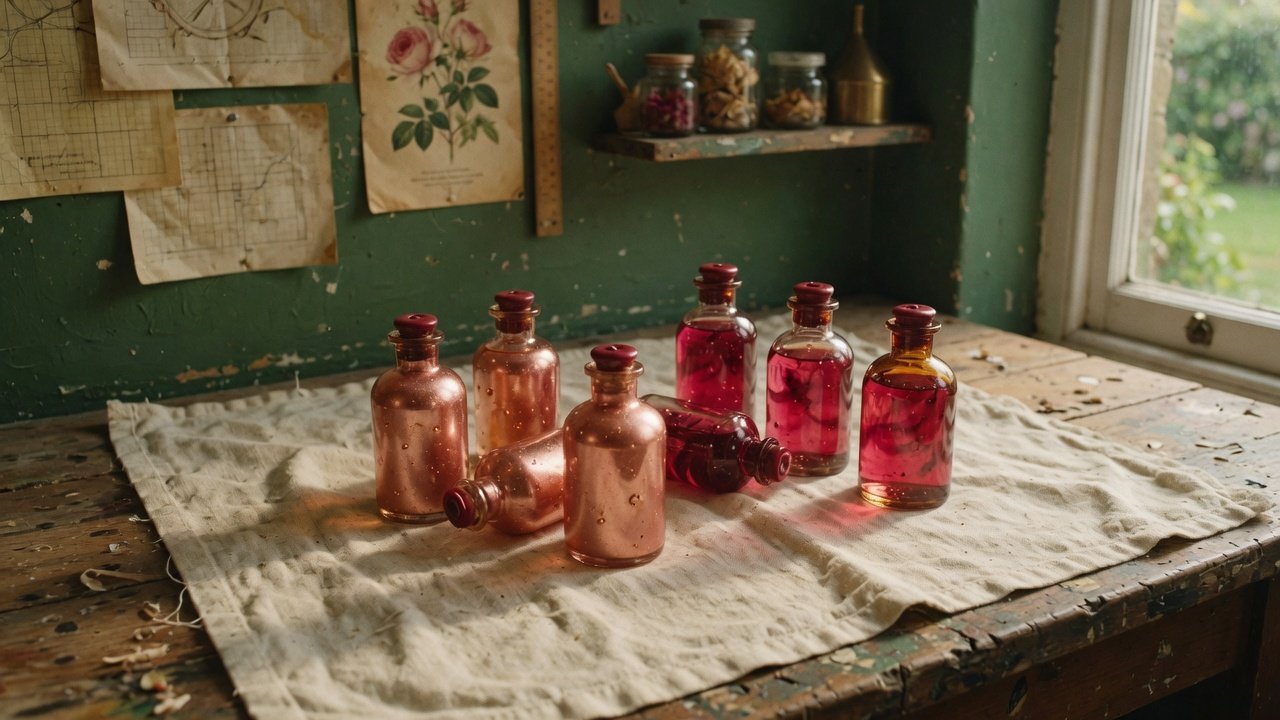
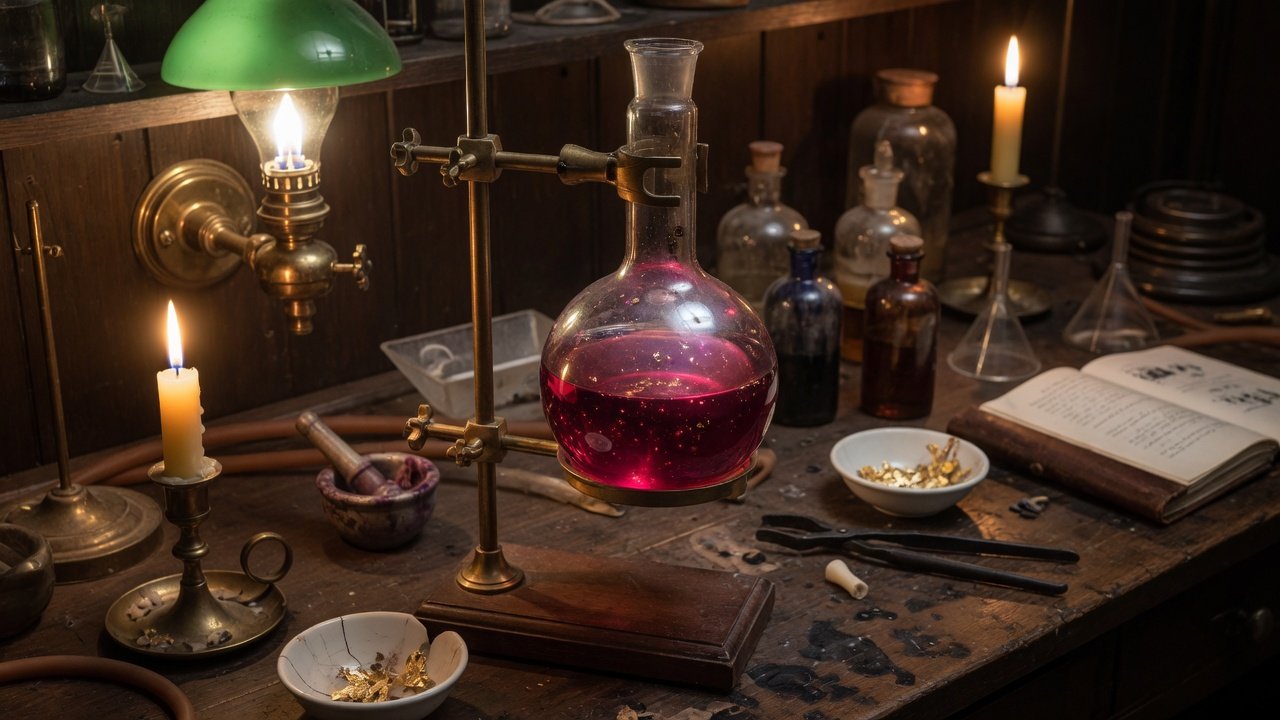
Victorian flask of ruby gold colloid Faraday

The first metallic hydrosol1856–57

Ruby water, metal that will not settle

Michael Faraday, working on light and thin gold, reduced gold chloride and got a faint ruby fluid. The particles stayed up. They did not fall. He wrote that a cone of light was well defined in the liquid by the illuminated particles — Tyndall’s beam before the name stuck to silver. Some of those sols still sit at the Royal Institution, optically active after a century and a half. That is a colloid: metal in water, not a dissolved salt.

Thomas Graham had coined “colloid” in 1861 from kolla, glue. Faraday had already made the gold one. Everything after — Zsigmondy’s ultramicroscope, nano gold, Crystal’s 40 PPM — is that flask, refined.

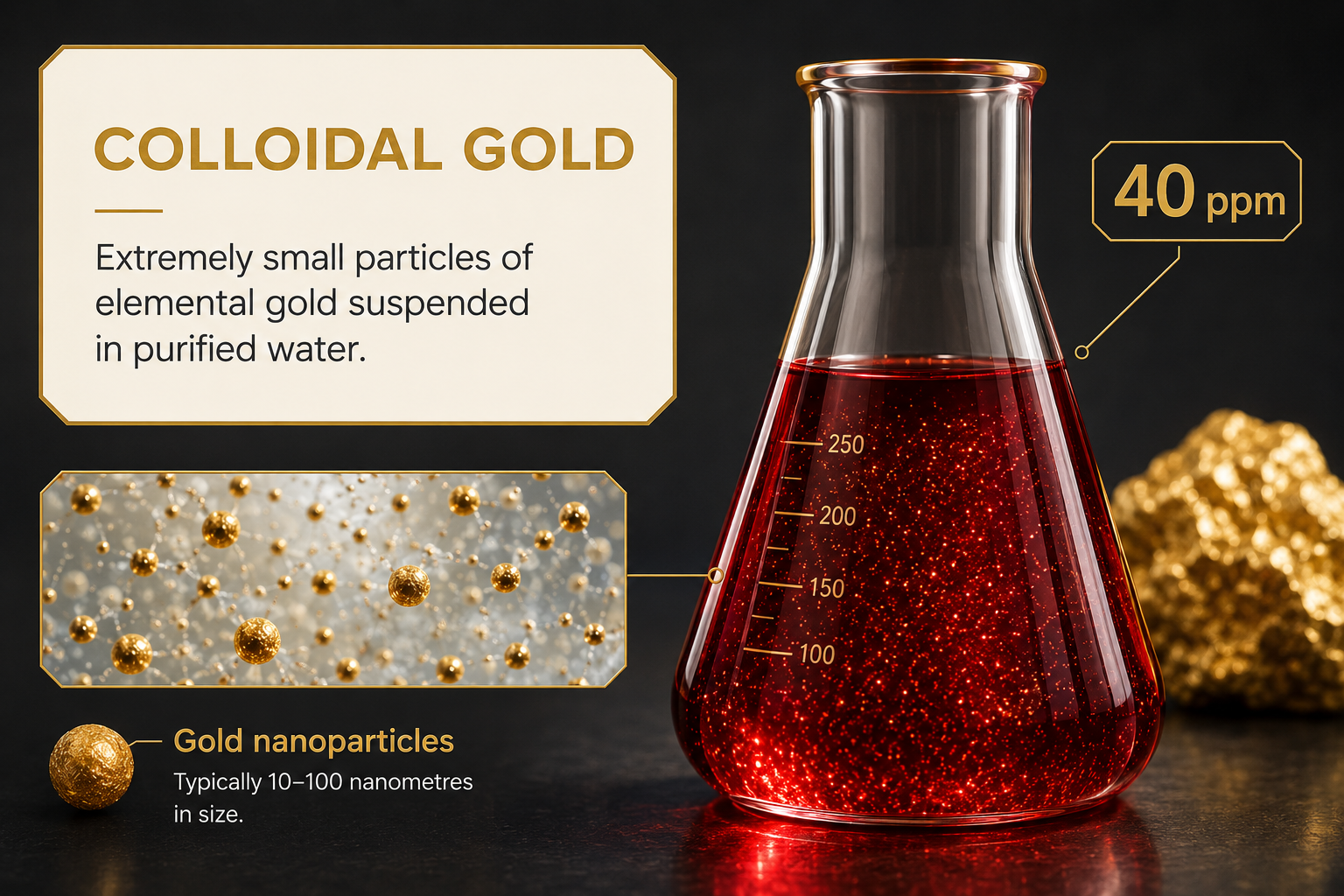
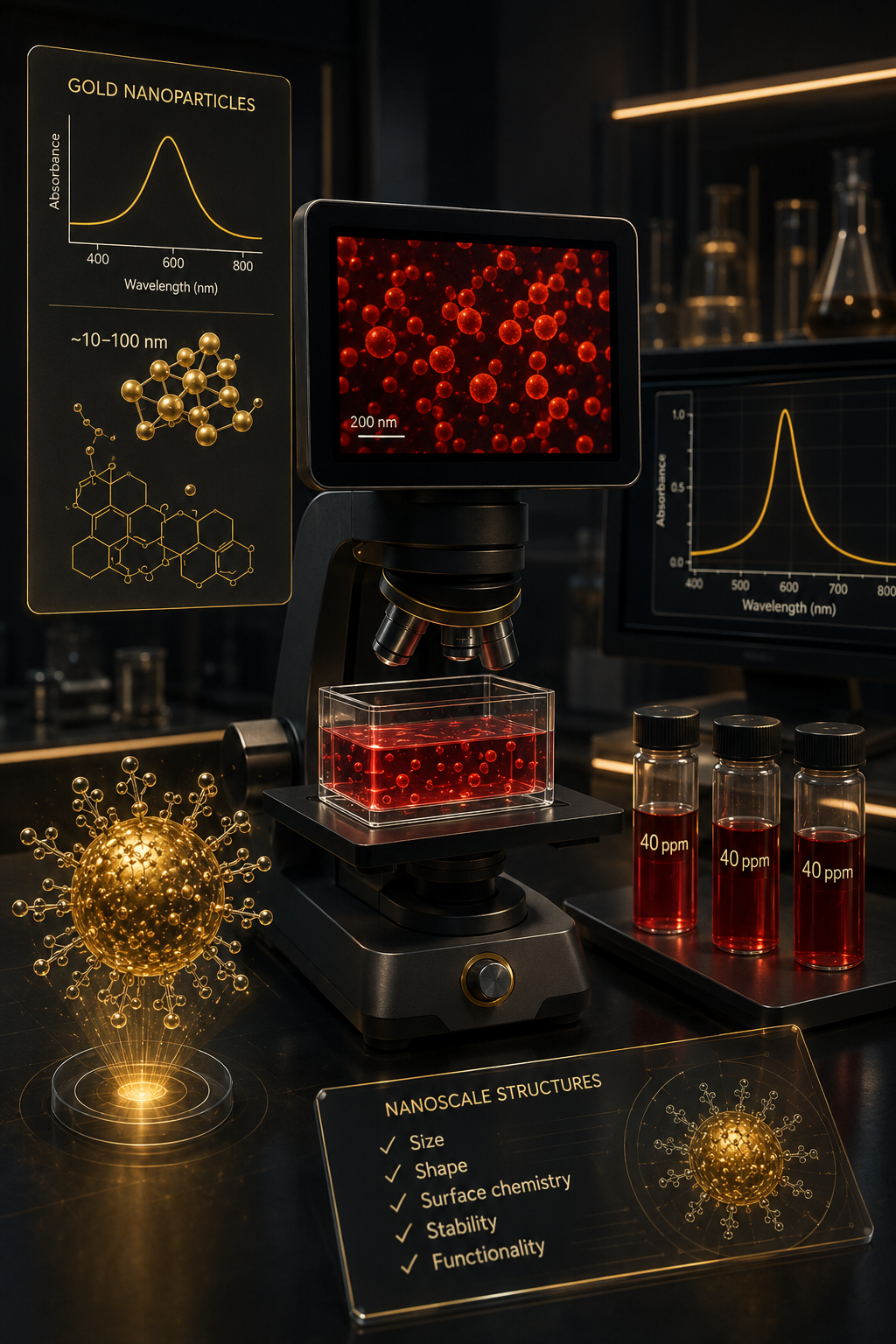
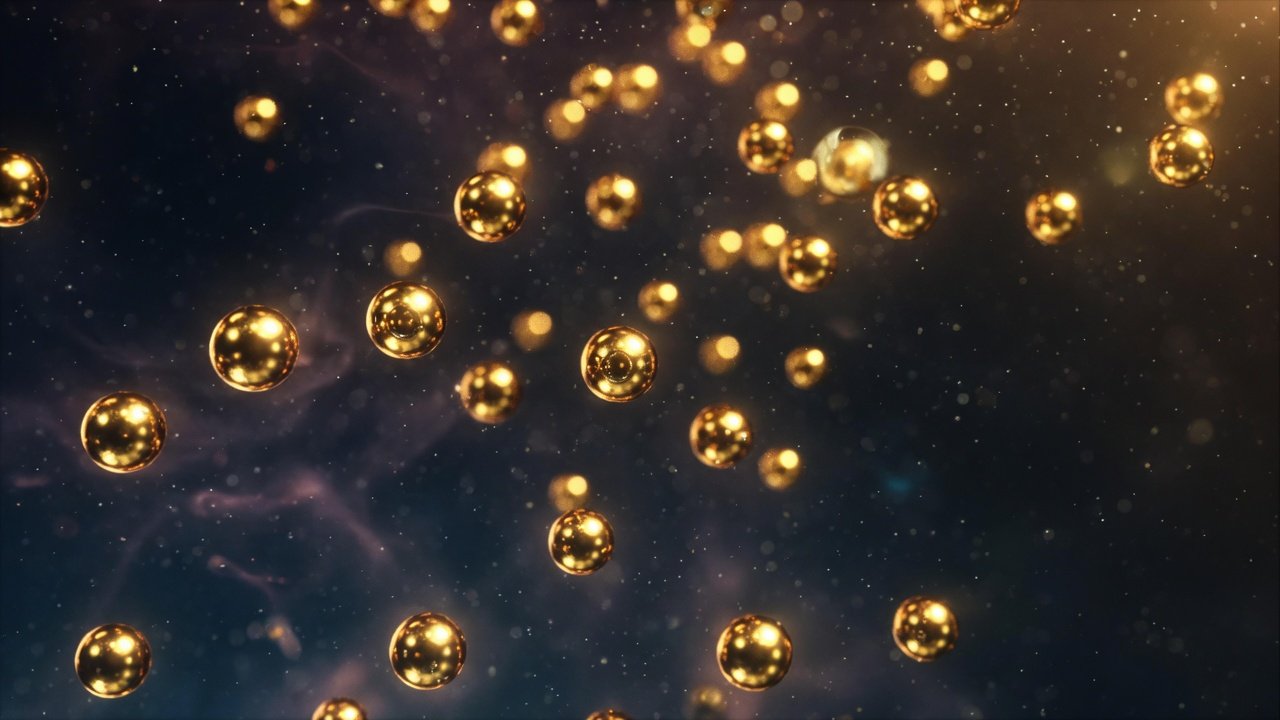
Gold nanoparticles in water The particle

Ultramicroscope · Nobel1897–1925

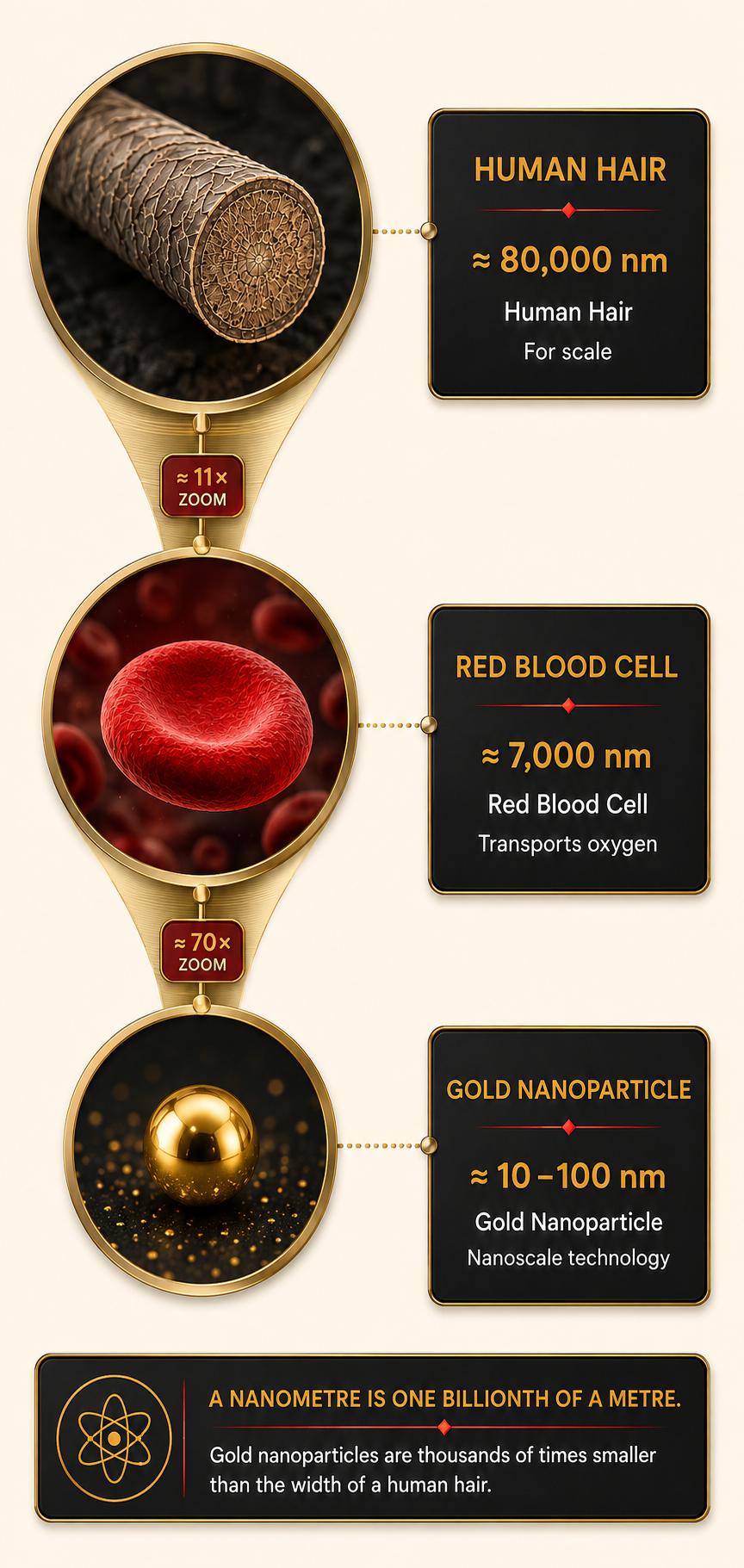
The colour was particles

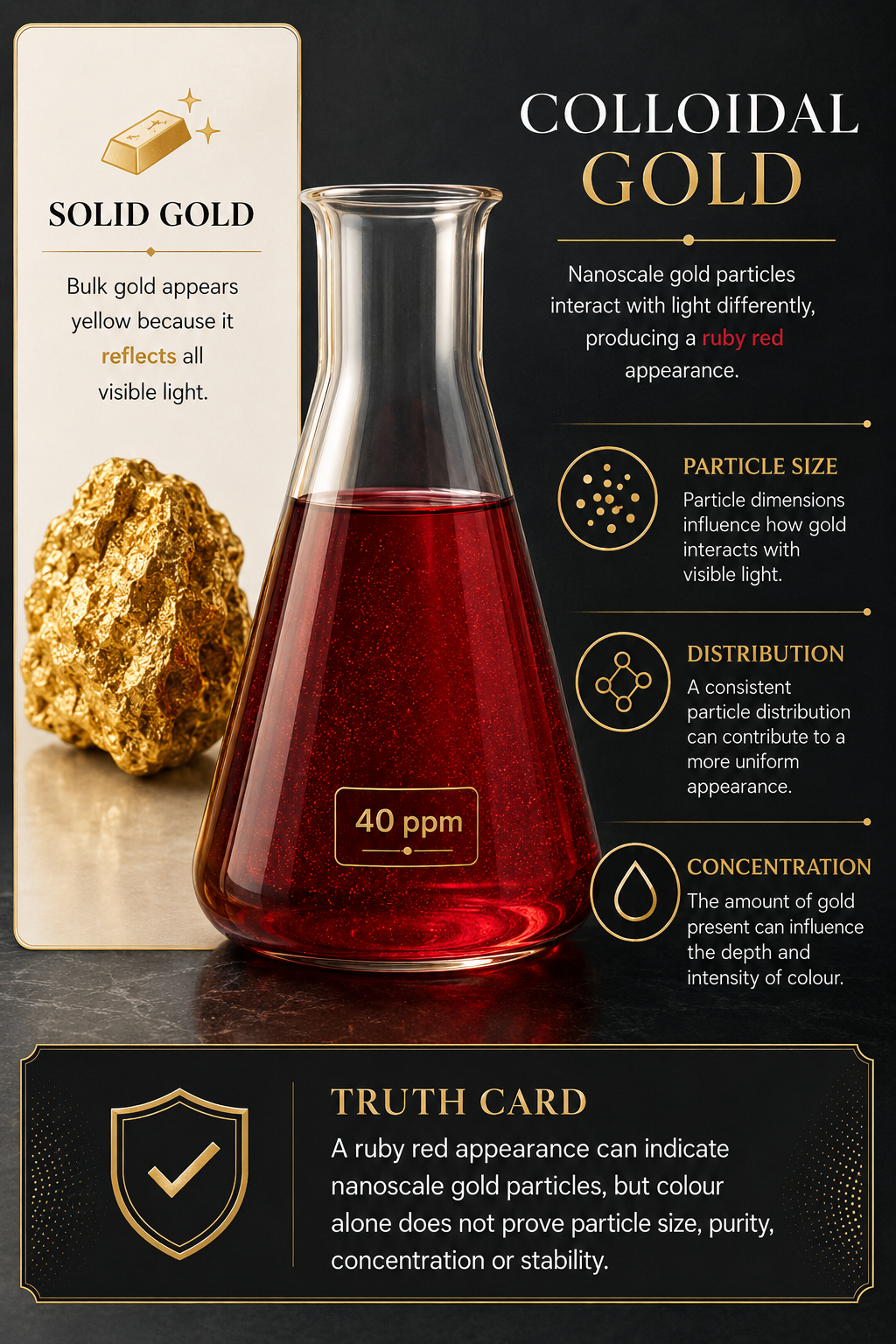
Richard Zsigmondy, at Schott in Jena, measured gold sols and proved the ruby was not a dye. The ultramicroscope made the particles visible. The 1925 Nobel in Chemistry is the laboratory admitting what Faraday’s flask had been saying since 1856. “Nano” is a late word for an old size.

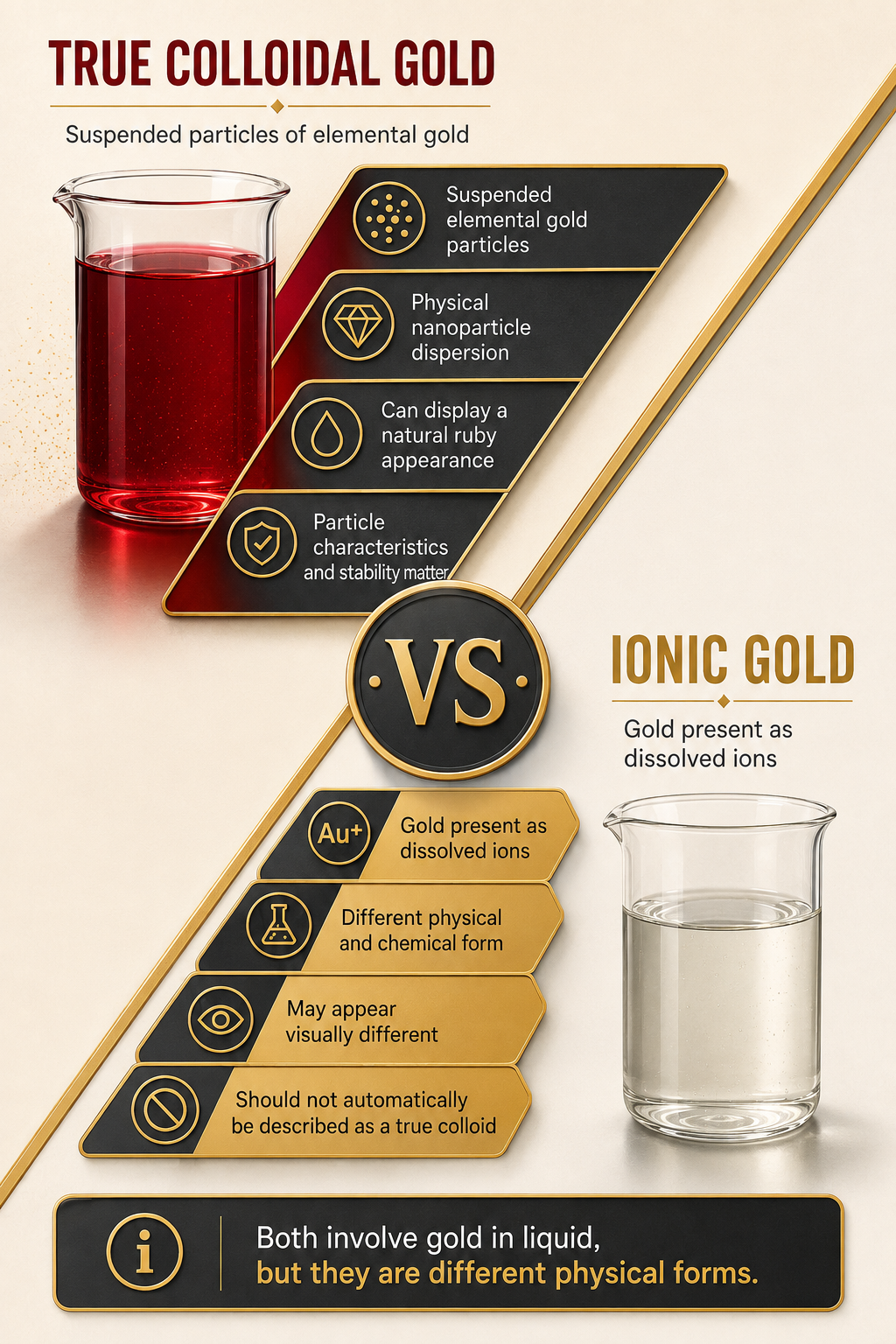
Twentieth-century rheumatoid clinics then used injectable gold salts. Same element, different chemistry — lunar caustic’s cousin, not Faraday’s hydrosol. The scare still mashes them. Crystal belongs to the flask, not the salt.

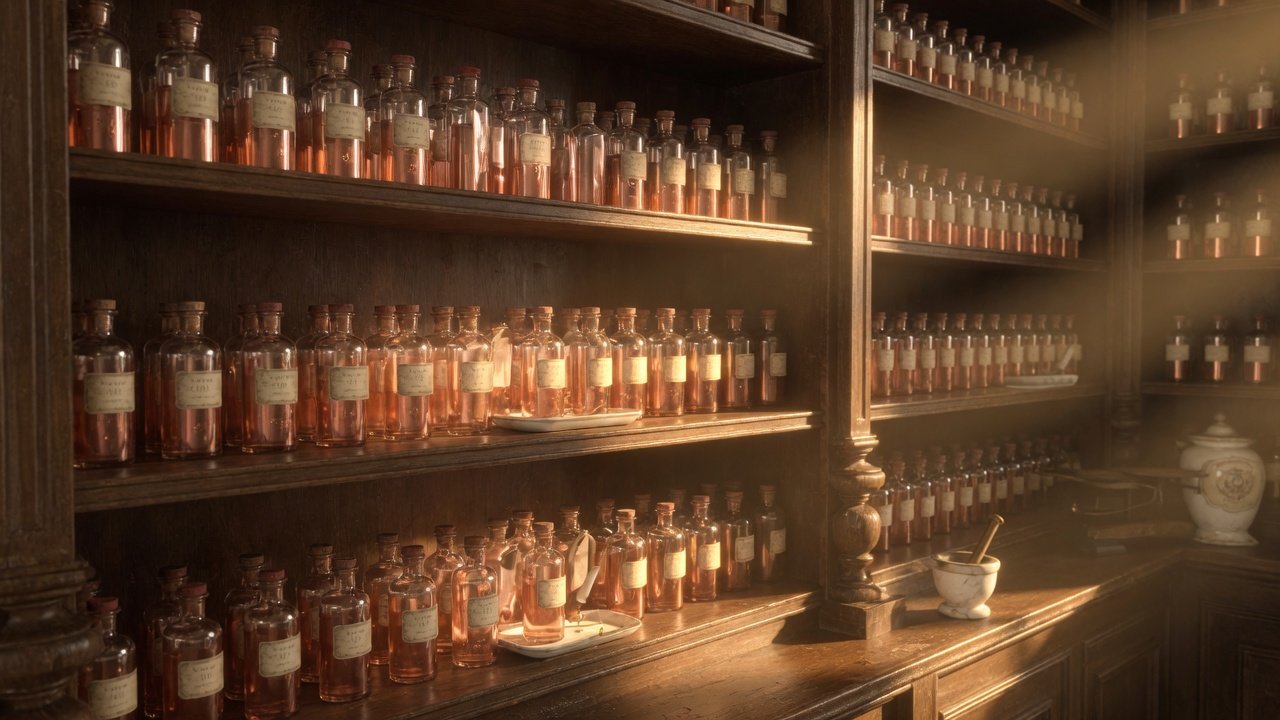
Amber bottles of colloidal gold The clinic

Nerves, glands, will1800s–1965

Not an antiseptic. A different shelf.

Colloidal gold is not considered an antiseptic or an antibiotic. The old literature puts nano gold against inflammation, glands, the pineal, the weather of the mind — not against infection. Cairo and Brinckmann’s Brazilian Materia Medica (1965) listed it first against obesity. In the United States it was used for dipsomania, the craving for alcohol, and later spoken of for drug craving and overeating, as an increase of will. Arthritis, bursitis, rheumatism, tendonitis. Digestive sluggishness, circulation, depression, burns, the heat of the menopause. The books call these the sicknesses of the heart.

A daily pairing of gold with silver is the traditional combination: silver for the germ, gold for the nerves and the glands. Faraday’s colour, Crystal’s bottle, the same metal in water.

The test

Tyndall. The beam that proves it is a colloid.

A true solution stays dark. Particles scatter. Faraday saw the cone of light in his ruby fluid. Put a laser through Crystal’s gold and the path is invisible in air — then a line in the liquid. Metal in water. Not a salt soup.

“The colour was particles.”
Zsigmondy’s Nobel, Faraday’s flask

The film

Crystal colloidal gold bottles The workshop

Crystal Health & BeautyNow

Amber. Distilled. 40 PPM.

Crystal’s colloidal gold is Faraday’s line: nano gold in purified water, 40 parts per million, amber glass, UK workshop. No colours, flavours or fillers. The ruby is the particle scattering light. Take it in the morning if a late dose keeps you wakeful. No metal spoon. Pair it with silver if you want the old combination.

Read The Benefits of Colloidal Gold. Shop the 40 PPM bottle. The workshop is the end of this timeline, not a break from it.

Molten gold Au

FAQ

Colloidal gold history, asked plainly

What is colloidal gold?

Elemental gold as nano-sized particles held in water. Faraday first made metallic gold colloids in the 1850s. The ruby or purple colour is how those particles scatter light, not a dye. It is not an antiseptic. That is silver’s old job. Gold’s record is nerves, glands and inflammation.

When was colloidal gold first made?

Purple of Cassius — gold in glass — is seventeenth century. Faraday made stable gold hydrosols in 1856–57. Zsigmondy measured them, won the 1925 Nobel, and proved the colour was particles. Crystal’s bottle is that line: metal in distilled water, 40 PPM, amber glass.

What is the Tyndall effect in colloidal gold?

A true solution stays dark. Particles scatter. A laser through Faraday’s ruby sol draws a solid line in the liquid and stays invisible in air. That is how you know you have a colloid, not a dissolved salt.

How is Crystal’s colloidal gold made?

40 PPM gold particles in purified water, amber glass, UK workshop. No colours, flavours or fillers. Pair it with silver if you want the old combination: silver for the germ, gold for the nerves and the glands.

Is injectable gold the same as a colloid?

No. Twentieth-century rheumatoid clinics used gold salts. Faraday’s hydrosol is metal in water. Same element, different chemistry — the same distinction the silver record makes between lunar caustic and a true colloid.

From Root To Crown

Faraday’s flask. Crystal’s bottle.

40 PPM gold in purified water, made in the UK, in amber glass. That is Crystal’s place in this history.

Shop colloidal gold