

No products in the cart.

Mountain Shilajit Resin — The Earth’s Most Powerful Mineral Tonic
Table of Contents
What Makes Shilajit So Powerful?
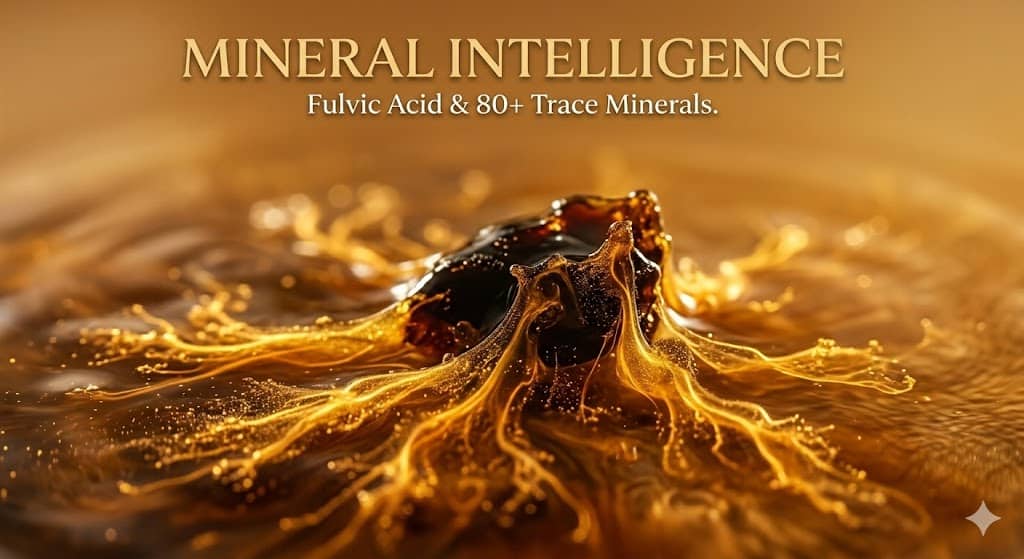
So what actually gives Shilajit its reputation? Why has it been revered for centuries across multiple traditional systems?
To begin with, the core of Shilajit’s strength lies in its fulvic acid content. However, that is only part of the picture. Shilajit is not simply high in fulvic acid. Rather, it is a complex mineral matrix, and fulvic acid acts as the key that makes that matrix biologically active.
Fulvic acid forms naturally through the slow breakdown of plant matter over long periods of time. More importantly, it functions as a carrier and transporter within the body. You can think of it as a microscopic shuttle system. It binds to minerals and trace elements, then helps escort them across cell membranes. As a result, bioavailability improves. Uptake becomes more efficient. Nutrient delivery strengthens.
Minerals on their own provide value. However, minerals delivered efficiently into cells create a completely different outcome.
For this reason, traditional systems referred to Shilajit as a rasayana, or rejuvenator. Practitioners valued it not only for energy, but for its ability to enhance the body’s capacity to absorb, assimilate and utilise nutrients more effectively. In other words, it did not simply add something new. It improved how everything else functioned.
Today, that principle matters more than ever.
Modern diets often lack mineral density. Soil depletion reduces trace mineral content in crops. Food processing strips nutrients from whole foods. Chronic stress increases mineral demand. In addition, poor sleep depletes magnesium, while environmental load raises the body’s detox requirements. Heavy training, pregnancy and sustained mental strain all draw from the same mineral reserves.
Therefore, minerals are not a side note in health. They are foundational.
Every nerve impulse depends on mineral gradients. Each muscle contraction relies on balanced electrolytes. Hormone production requires specific trace mineral cofactors. Detoxification pathways depend on mineral support. Meanwhile, mitochondria, the energy engines inside your cells, require minerals to generate ATP efficiently.
When mineral status declines, energy production becomes unstable. You may not simply feel tired. Instead, you feel wired and tired at the same time. Focus fades. Recovery slows. Mood becomes more reactive. Stress feels heavier than it should.
At this point, Shilajit’s mineral intelligence becomes highly relevant.
Rather than supplying isolated nutrients, Shilajit delivers minerals within a naturally occurring fulvic complex that enhances transport and cellular uptake. Because of this, it works alongside the body’s electrical and biochemical systems instead of forcing them.
Consequently, Shilajit does not behave like a stimulant.
It does not spike you like caffeine. It does not overstimulate the nervous system only to leave you depleted an hour later. It does not mask fatigue.
Instead, many people report steadiness. A grounded lift. More consistent output throughout the day. Less mid afternoon crashing. Clearer thinking. Improved endurance, both mentally and physically.
In short, the energy feels stable rather than artificial. The resilience builds rather than burns out.
Ultimately, when you restore mineral sufficiency and improve cellular efficiency, the system begins to stabilise. You no longer need to chase stimulation because the foundation supports you properly.
That is mineral intelligence at work.
Energy, Mitochondria & Cellular Drive
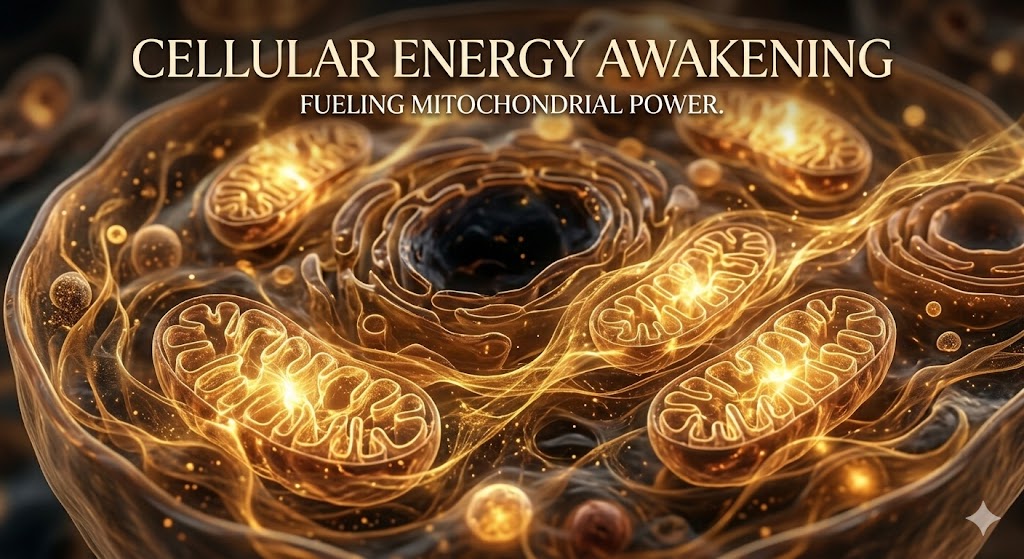
One of the most talked about aspects of Shilajit is its relationship with cellular energy. Not surface energy. Not temporary stimulation. True cellular drive that begins at the deepest biological level.
At the centre of this conversation sit the mitochondria. Inside every cell in your body, these tiny structures generate ATP, the molecule that powers almost every biological process. Movement depends on it. Thought depends on it. Repair, detoxification, hormone production, muscle contraction and nerve transmission all depend on it. Without consistent ATP production, the body cannot maintain stable performance.
When mitochondrial output remains strong and efficient, the difference is noticeable. Physical stamina increases. Mental endurance extends. Recovery feels smoother and more predictable. Stress becomes easier to process. Overall fragility decreases because the system has sufficient energy to respond effectively.
By contrast, when mitochondrial function declines, everything feels heavier. You tire faster. Focus drops sooner. Recovery lags behind effort. Stimulants become more tempting because baseline energy no longer feels reliable. In that state, you may feel wired yet not genuinely energised.
Traditional herbal systems have long linked Shilajit to mitochondrial support, and this association has logical foundations. Shilajit contains fulvic acid alongside a spectrum of trace minerals that serve as essential cofactors in enzymatic reactions involved in ATP production. These reactions require minerals to function efficiently. When mineral availability declines, energy generation slows accordingly.
In addition, fulvic acid enhances mineral transport into cells. As a result, the likelihood increases that these cofactors reach the mitochondria where energy production actually occurs. That combination of mineral density and improved delivery explains why Shilajit earns its reputation as a cellular tonic rather than a surface level energy booster.
When mitochondrial function improves, the experience differs from stimulation. There is no sharp spike and no nervous buzz. Instead, stability increases. Output feels steady. Endurance becomes sustainable rather than forced.
Historically, this quality made Shilajit valuable to warriors preparing for battle, labourers working long hours in demanding environments, monks training at high altitude and individuals facing intense physical strain. They did not value it because it jolted the nervous system. They valued it because it supported endurance at a foundational level.
Importantly, it supports output without draining reserves. It allows the body to generate its own energy more efficiently instead of borrowing from future capacity.
That distinction matters.
Many modern energy products stimulate cortisol and adrenaline. They create temporary output followed by inevitable depletion. Over time, that cycle strains the system further.
Shilajit operates differently. Rather than overriding biological processes, it supports them. By enhancing mineral sufficiency and cellular efficiency, it helps energy production become smoother and more sustainable.
Consequently, consistent use may translate into greater resilience, improved training capacity, stronger mental stamina and faster recovery between physical efforts. Long days become more manageable because baseline energy feels stable.
Ultimately, it builds from within. It reinforces the machinery instead of whipping it.
That is the difference between stimulation and true cellular drive.
Brain Clarity & Cognitive Function

Hormonal Support & Vitality

Traditionally, Shilajit has been linked to reproductive vitality, particularly male vitality. However, its influence extends far beyond one gender or one isolated system. Rather than targeting a single hormone pathway, it works through foundational physiology.
To understand this, it helps to look at the endocrine system as a network rather than a set of separate glands. Hormones do not appear in isolation. Enzymes create and convert them. In turn, those enzymes rely on minerals as cofactors. Every stage of hormone synthesis, conversion and regulation depends on specific raw materials. When those materials run low, efficiency declines.
Minerals such as zinc, magnesium, selenium and boron all contribute to hormonal regulation. Zinc participates in testosterone metabolism and immune signalling. Magnesium supports stress response and nervous system balance. Selenium plays a role in thyroid function. Boron influences hormone modulation and mineral metabolism. High quality Shilajit resin naturally contains these trace elements within its mineral matrix.
Because these minerals exist together within a fulvic rich structure, delivery and uptake become more efficient. As mineral sufficiency improves, the endocrine system does not need to strain as hard to maintain balance. Output stabilises. Hormonal swings feel less extreme. Recovery from stress becomes smoother.
For this reason, Shilajit has historically been associated with increased drive and stamina. Importantly, this effect does not come from artificially forcing testosterone or triggering abrupt hormonal spikes. Instead, it arises from strengthening the terrain in which hormones are produced and regulated.
In Ayurvedic terminology, Shilajit nourishes ojas. This concept refers to your deep reserve of vitality rather than surface energy. Ojas represents the quiet strength that supports endurance. It influences recovery, mood stability under pressure, immune resilience and the steadiness of personal drive.
When ojas remains strong, vitality follows.
Many people report improved drive, stronger physical stamina and a greater sense of inner momentum with consistent use. Libido may feel more natural. Motivation may stabilise. Mood often feels anchored rather than reactive. Training capacity can increase, and recovery between efforts may shorten.
Importantly, these changes do not occur in isolation. They connect through interconnected pathways.
Hormones influence mood. Mood shapes motivation. Motivation drives output. Output affects recovery. Recovery feeds back into hormonal stability. When one layer strengthens at a foundational level, the benefits ripple outward.
Therefore, the experience rarely centres on one single improvement. Instead, it unfolds as a cascade.
As vitality improves, mood steadies. As mood steadies, motivation strengthens. As motivation strengthens, physical output becomes sustainable. As output becomes sustainable, recovery improves. In turn, libido and mental sharpness feel natural rather than forced.
This ripple effect reflects the power of supporting the endocrine foundation instead of chasing quick hormonal manipulation.
Stress Adaptation & Resilience

Shilajit is often described as adaptogenic. In practical terms, that means it supports the body’s ability to adapt to stress instead of merely masking its symptoms.
To understand why this matters, it helps to redefine stress. Stress is not limited to emotional tension or anxiety. It includes physical strain from intense training. It includes chemical exposure from the environment. It includes lack of sleep, financial pressure, parenting demands and constant stimulation from screens and artificial light. In reality, modern life applies pressure from multiple directions at once.
Although these stressors differ on the surface, they draw from the same internal reserve. Each one consumes minerals. Each one taxes the nervous system. Each one increases adrenal demand. Each one requires mitochondrial energy production. Over time, if those reserves remain unreplenished, the system loses resilience.
As reserves decline, reactivity rises. Minor challenges feel disproportionate. Recovery stretches longer. Mood swings intensify. Energy becomes unpredictable. You may feel wired late at night yet flat during the day. Importantly, that pattern does not reflect emotional weakness. Instead, it signals physiological strain.
Adaptogens operate differently from sedatives or stimulants. They do not numb stress. They do not disconnect you from reality. Rather, they strengthen the terrain so the body can process stress more efficiently.
Shilajit’s adaptogenic reputation relates closely to its mineral density and fulvic acid content. Minerals play central roles in stress regulation. Magnesium supports nervous system balance. Zinc contributes to immune resilience during prolonged strain. Trace minerals assist enzyme reactions involved in cortisol regulation and energy metabolism. Without sufficient mineral support, stress hormones can shift out of balance.
When mineral sufficiency improves and cellular energy production becomes more efficient, capacity expands. The body responds instead of reacting. Regulation becomes smoother.
Consequently, many people who use Shilajit consistently report greater stability during demanding periods. They feel less reactive and more grounded when life becomes chaotic. The effect does not resemble numbness or emotional flatness. Instead, it feels like steadiness. That steadiness often indicates that the nervous system and adrenal pathways operate from a stronger baseline.
Rather than relying on emergency chemistry, the body begins functioning from a more balanced state.
Resilience does not eliminate stress. Instead, it increases capacity.
When mineral stores replenish and energy production stabilises, stress becomes something the system can process instead of something that overwhelms it.
Once again, minerals remain central to the equation.
Strengthen the foundation and resilience follows naturally.
Detox & Nutrient Absorption

Fulvic acid plays a unique and powerful role in this area. Rather than acting as a simple mineral component, it functions as a transport molecule that enhances movement throughout the body.
One of its defining characteristics involves its ability to bind to compounds and carry them across cell membranes. This process includes essential minerals and nutrients. At the same time, it may also involve certain metabolic waste products and environmental residues. Because of this dual capacity, fulvic acid supports both delivery and removal within the cellular environment.
In practical terms, fulvic acid improves movement. It supports transport. It enhances flow.
Efficient health depends on two ongoing processes working well together. First, nutrients must enter cells efficiently. Second, waste must exit efficiently. When either process slows down, internal congestion begins to develop. As a result, you might eat well and still feel sluggish if absorption remains compromised. Likewise, you might attempt detox protocols yet continue to feel burdened if elimination pathways lack support.
Fulvic acid helps address this imbalance by binding to nutrients, increasing their solubility and improving their bioavailability. Consequently, minerals and trace elements are more likely to reach the cells where they are actually required rather than passing through unused.
Simultaneously, fulvic compounds can attach to certain unwanted substances and assist in guiding them out of the system through natural elimination pathways. This dual action distinguishes fulvic acid from many other compounds. It does not merely bring beneficial elements inward. It also supports the removal of what no longer serves the system.
In effect, it improves both nutrient delivery and waste removal at the same time.
When absorption improves, the entire system functions more efficiently. Other supplements become more effective because the body utilises them properly. Food provides greater benefit because mineral uptake increases. Cellular transport becomes smoother, reducing internal stagnation.
Too often, people focus solely on adding more supplements. However, few consider whether their bodies absorb what they consume. If nutrient transport remains inefficient, increasing intake rarely solves the underlying issue. Improving absorption fundamentally changes the equation.
Shilajit does not replace a balanced diet or override poor lifestyle habits. Instead, it enhances the efficiency of what you already do. By improving cellular transport and mineral availability, it supports better nutrient utilisation and smoother metabolic waste processing.
When cellular flow improves, energy tends to stabilise. Clarity often increases. Recovery may become more efficient.
Ultimately, the goal does not involve forcing detoxification. Rather, it involves supporting intelligent transport within the body.
When transport operates efficiently, the system runs cleaner and performs more effectively overall.
How to Use It Properly

Because Shilajit is highly concentrated, large amounts are unnecessary. In fact, increasing the dose does not increase the benefit. Its strength lies in density and complexity rather than quantity.
Traditionally, a pea sized portion provides sufficient support. Even that small amount contains a meaningful concentration of fulvic compounds and trace minerals. When you dissolve it in warm water, the resin turns the liquid a deep amber colour. That colour reflects its mineral richness and concentration.
Warm water works best because gentle heat allows the resin to dissolve fully and evenly. Stir the mixture slowly until it disperses completely. Some people prefer to add it to herbal tea for a smoother experience. Others combine it with raw honey before dissolving it in water. The taste remains strong, earthy and slightly bitter. That flavour is normal and expected. Mineral density does not taste sweet or neutral.
Most people take Shilajit in the morning or early afternoon. Since it supports cellular energy production and mental clarity, many notice a subtle lift in alertness and focus. For that reason, evening use may interfere with winding down before sleep. Timing therefore plays an important role in maximising its benefits.
Above all, consistency determines results.
Shilajit does not operate as a single dose miracle. It does not create dramatic change overnight. Instead, its benefits build gradually. As mineral stores replenish and cellular processes improve, positive effects accumulate. Energy stabilises. Focus sharpens. Recovery strengthens. Resilience increases.
Rather than flipping switches, Shilajit strengthens foundations.
When you use it consistently over weeks rather than days, the body adapts to improved mineral sufficiency and enhanced nutrient transport. Consequently, the results feel steady and sustainable instead of sudden and intense.
In short, think in terms of small doses, daily use and long term perspective.
That approach reflects how traditional systems respected and properly used Shilajit.
What to Look For in Quality

Purity matters. With something this concentrated, quality is not optional. It defines the entire experience.
Although Shilajit forms in remote mountain environments, origin alone does not guarantee cleanliness. Harvesting methods, purification techniques and post collection handling determine whether the final product remains a clean, bioactive resin or degrades into something compromised.
For example, low quality Shilajit may be diluted, overheated during processing or mixed with fillers to increase volume. In some cases, manufacturers press it into powders or tablets to improve shelf stability and simplify mass production. However, excessive heat can damage delicate fulvic compounds. Likewise, aggressive processing can strip away the natural complexity that gives Shilajit its strength.
Authentic, high quality Shilajit remains in resin form. Resin preserves its original structure and mineral integrity. At room temperature, it should feel soft and pliable. When placed in warm water, it should dissolve fully and turn the liquid a rich amber colour. Importantly, no gritty residue should remain at the bottom of the glass. Grit often signals contamination or incomplete purification.
Beyond texture and dissolution, laboratory testing plays a crucial role. Because Shilajit is mineral dense, it can accumulate heavy metals if harvested from polluted areas. Therefore, responsible suppliers test for contaminants to ensure safety and purity. Careful sourcing and controlled purification protect both potency and integrity.
In addition, altitude source influences quality. Regions such as the Altai typically offer cleaner air, lower industrial exposure and mineral rich geological terrain. Environment shapes composition. Shilajit formed in pristine high altitude ecosystems generally reflects the purity of its surroundings.
Sensory cues also provide useful insight. Genuine resin carries a deep, dark colour and a strong earthy scent. It softens with warmth and firms slightly in cooler temperatures. Its taste remains mineral rich and slightly bitter. By contrast, an artificially sweet or completely neutral flavour may indicate alteration.
When the resin is authentic, the difference becomes noticeable. Texture feels dense and substantial. Dissolution appears clean and complete. Effects feel steady rather than erratic. The overall experience carries depth and weight that reflect centuries of natural formation.
Ultimately, choosing Shilajit involves more than selecting a supplement. It involves selecting a source. When purity, altitude and careful handling align, the result demonstrates its quality without exaggeration.
Final Insight